Robert E. Lee on Leadership – H.W. Crocker III Interview

Arguably, the War Between the States might have ended much sooner than it did had men like Robert E. Lee not fought for the Confederacy.

For at least a century Lee’s position in the Pantheon of great American leaders went unchallenged, but that position has been increasingly questioned in more contemporary times. Historians, most notably Douglas Southall Freeman, did much to document Lee’s character and managerial style. But some have begun arguing that Freeman went too far to memorialize the Army of Northern Virginia general.

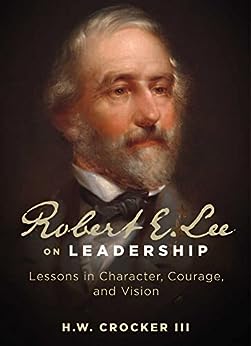
H.W. Crocker III is not one of those who worships the great leader as an untouchable figure, but he does argue that Lee’s leadership and personal discipline are worthy of study and emulation. As such, Mr. Crocker penned a fascinating work using Lee’s history in an effort to highlight leadership principles that may be used by anyone in any business. At it’s heart, the book is not so much a history book, though it uses historical events to illustrate key points. It’s more of a business/management work in that it uses history to offer insight to organization and team-building. For that reason, this book stands out among other business/management works, because the history is so captivating the reader wants to know and learn from each successive example.

After listening to this episode, get the book for the history, and enjoy the leadership education Mr. Crocker articulates from the life of one of America’s most interesting figures. You won’t be disappointed.

LINKS TO THE PODCAST:

H.W. Crocker III Books:


All photography used on this site is owned and copyrighted by the author unless otherwise noted. The Featured Image is of Robert E. Lee on Leadership: Lessons in Character, Courage, and Vision.

Music used for this episode – Louis Armstrong and the Mills Brothers,”Carry Me Back to Old Virginia” available on Apple Music, and Selections from the “The Planets: Op. 32 – Mars: The Bringer of War” by Gustav Holst, performed by the London Symphony Orchestra, conducted by Sir Colin Davis.

The Jeffersonians – Dr. Kevin Gutzman Interview

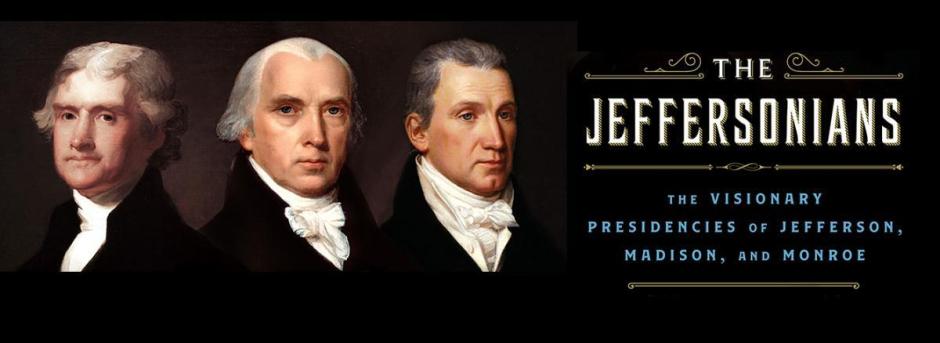
Few eras, if any, were more influential in American History than the period between 1800 and 1824. Dr. Kevin Gutzman focuses upon this period in his newest book, The Jeffersonians: The Visionary Presidencies of Jefferson, Madison, and Monroe.

Most writers separate this period at least into two sections, 1800-1815, and then 1815-1824. Even more historians chop the era into 3 separate chunks based upon each presidential administration. In so doing, those works focus largely upon the man occupying the Presidential office, but Dr. Gutzman has a different focus in his work.

The Jeffersonians were more than just the three Presidents dominating this era. They were followers of a visionary ideal set forth from a list of principles largely derived from Thomas Jefferson’s First Inaugural Address. Those principles governed domestic, foreign, economic, and judicial policies during the only era in which three men from the same party were elected to two successive terms each.

Such was the Jeffersonian dominance that the main political opposition, the Federalist Party, ceased to exist before the era ended. But the Jeffersonian era wasn’t without controversy. Most opposition to the Jeffersonian vision came from judicial review. Madison’s administration, however, added economic and foreign policy debacles that should have at the very least undone his tenure. Still, opinion remained rather favorable even when opposition arose from the Hartford Convention that formed in order to address Madison’s mismanagement.

Favor turned into the Era of Good Feelings as Monroe’s administration was called. The young United States grew, people were genuinely happy with Monroe’s leadership, and his political appointments executed their respective jobs with aplomb. Yet, when Monroe’s time ended, so too did the Jeffersonian era. Perhaps that is not correct, given that successive generations still viewed the Jeffersonian vision admirably, but with Monroe’s retirement, an era most definitely ended.

Soon, some of the old Federalists morphed into new political parties, chief of whom were the Whigs, and many from the Jeffersonian camp were supplanted by Jackson’s newer vision. All of the movers involved in this post-Jeffersonian Era, however, found their beginning during the 24 year period dominated by the close-knit Virginian Presidents. As such, they all had been influenced by the Jeffersonians. For this reason and so many others the Jeffersonian Era is vitally important to American understanding, and Dr. Gutzman’s work illustrates the period with prescient skill, making his book a must read for scholars and enthusiasts alike.

LINKS TO THE PODCAST:

Dr. Gutzman’s Books:

Special Links:


All photography used on this site is owned and copyrighted by the author unless otherwise noted. The Featured Image is of The Jeffersonians.

Music used for this episode – Louis Armstrong and the Mills Brothers,”Carry Me Back to Old Virginia” available on Apple Music, and Selections from the “Appalachian Spring Suite” by Aaron Copeland, performed by the New York Philharmonic, conducted by Leonard Bernstein.

Colonial Virginia’s War Against Piracy – Jeremy Moss Interview

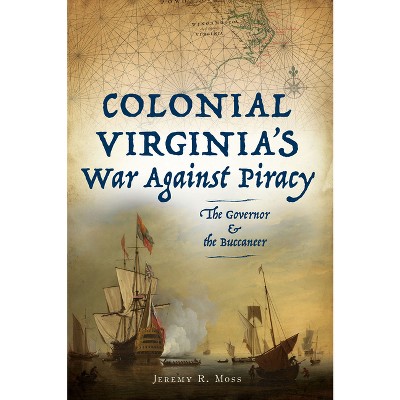
Piracy became quite a serious issue for Colonial Virginia during the late 17th Century. Many leading figures were split regarding how to handle the situation. Some didn’t want to handle it at all, as they saw piracy as useful outlet circumventing the hated Navigation Acts.

Governor Francis Nicholson chose to fight. His choice affected the colony in profound ways, as our guest for this episode argues in his newest book Colonial Virginia’s War Against Piracy: The Governor and the Buccaneer. Jeremy illustrates a battle that took place between the Virginia Capes, at the inlet of the Lynnhaven Bay.

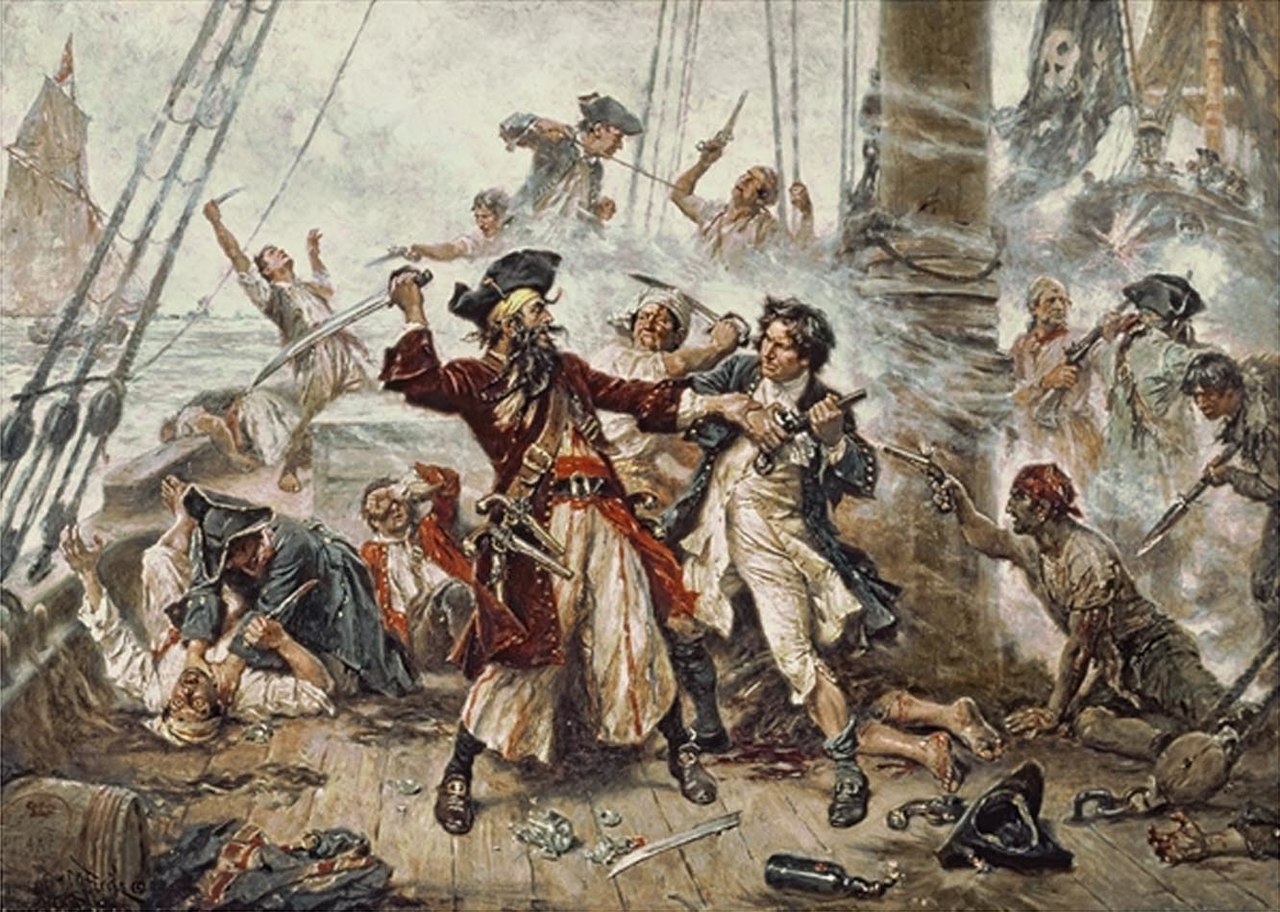
Nicholson, the oft-beleaguered governor, won the day. His victory helped future governors in their fight against piracy, most famously Alexander Spottswood’s involvement with Blackbeard. It also aided in bolstering rule of law in such a way that later influenced the American War for Independence.

Tune in to this episode to learn more about Nicholson’s fight with Louis Guittar, and then click the links below to purchase Mr. Moss’s books, as well as follow his work.

Capture of Pirate Blackbeard, 1718 (Wikipedia)

LINKS TO THE PODCAST:

JEREMY R. MOSS LINKS:

All photography used on this site is owned and copyrighted by the author unless otherwise noted. The Featured Image is Mr. Moss’s newest book – Colonial Virginia’s War Against Piracy: The Governor and the Buccaneer, from The History Press.

Music used for this episode – Louis Armstrong and the Mills Brothers,”Carry Me Back to Old Virginia” available on Apple Music, and “Sailor’s Waltz” by Josh Garrels, also available on Apple Music.