Podcast – Finally!

I’ve been talking about doing a podcast for quite some time. Now, I’m done talking and have started producing. My introduction episode is going live on iTunes and Stitcher today, well, I think they are at least. For those who’d rather not wait until that happens. Please, click this link, which should allow you to listen to the introduction.

Here is the rss feed, for those who would like it.

Once iTunes and Stitcher issues are sorted out, and the podcast goes live on those platforms, I will update this post with the relevant information. Otherwise, the podcast should be searchable on both platforms, as well as other podcasting platforms that feed off of either iTunes or Stitcher.

Thank you for being patient in this process! It’s definitely a work in progress, and I still have a lot to learn about how all of this works.

I would also like to thank two very good friends. First, Brandon Huebner, of the Maritime History Podcast, for his helping me with the finishing details necessary in order to produce a podcast. His patience and knowledge are unparalleled. Check his podcast out! You’ll be glad you did.

Last but most certainly not least, my thanks also extends to Ben Lalisan, an amazingly accomplished artist. His eye and attention to detail are second to none. I truly appreciate his pointing me in the right direction concerning my podcast logo. Check out some of his work, it is breathtaking!

I’ll begin recording the first “history” podcast within the next few days – Ajacan – Spain and the First European Attempt in Virginia. Tune in then, to see how this Jesuit Mission might have played an important part in Virginia’s early European history.

VAHP


All photography used on this site is owned and copyrighted by the author unless otherwise noted.
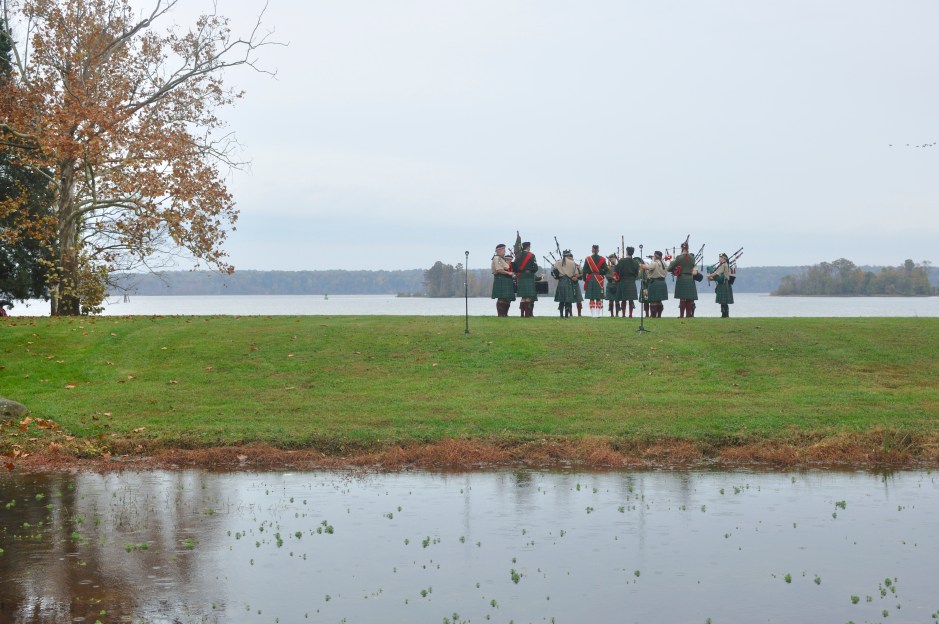
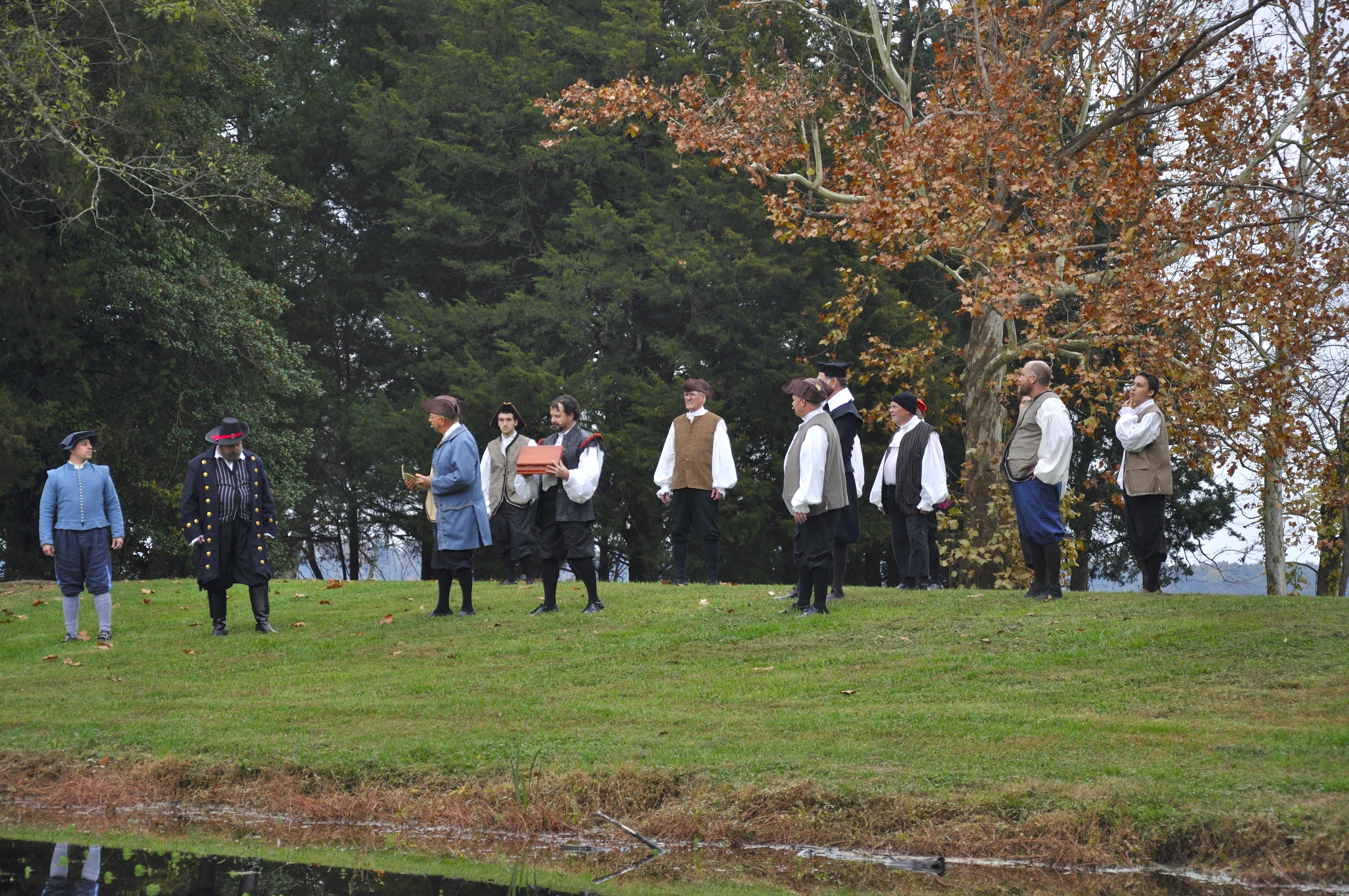
Berkeley Plantation’s Thanksgiving Festival

_DSC0147
The culmination of the day’s events is a short play done to re-enact the settler’s 1619 landing at the Berkeley Hundred.

This past weekend my wife, son, and I journeyed up the James River to Berkeley Plantation as planned. It was an enjoyable weekend – even if it did rain and remain somewhat cloudy the entire time. Here are a few pictures of our time there, as well as more shots illustrating just how beautiful Berkeley Plantation is. I quite enjoyed being there in November, as the leaves were changing all along John Tyler Highway, and along the James River.

_DSC0128
Chickahominy and Rappahannock Natives displayed their dress and ceremonial dances.

I enjoy history like very few people do, but my favorite part of this trip was watching my son’s excitement. He wanted to go here, and do this, and see that. By the end of the day only excitement kept him awake as we returned home. His excitement is exactly what I was looking forward to as a history-loving parent. Noted author Jeffrey Shaara of God’s and Generals fame shared a story about how his father Gettysburg author Michael Shaara instilled a passion for Civil War history by taking him to view Gettysburg when Jeff was 12 years old. It was that moment that Jeff fell in love with what his father had already loved for quite some time, thus instilling Jeff’s passion and drive.

_DSC0149
Johnny running up Berkeley’s terraces.

I’m not saying that I am by any stretch of imagination a Michael Shaara, nor am I saying that Johnny will become the next Jeffrey. What I am saying is that a father’s being able to share his passion with his son is an incomparable joy. Our living in Virginia is the perfect place for me to pass my passion down to my sons. What an awesome privilege!

_DSC0117
The main Thanksgiving Monument at Berkeley Plantation. Of note, Woodliff descendants, both young and old, were in attendance for the ceremony.
_DSC0099
Berkeley’s riverside entrance.
_DSC0097
Beautiful gazebo overlooking the northern section of the plantation.
_DSC0042
Johnny and Zandra playing the Game of Graces – sort of, Graces is played with two sticks and a hoop.
_DSC0046
Other Colonial pastimes on display.
_DSC0051
A settler encampment with a reenactor boiling water over a small fire.

The First Thanksgiving Was In Virginia!

Berkley_076
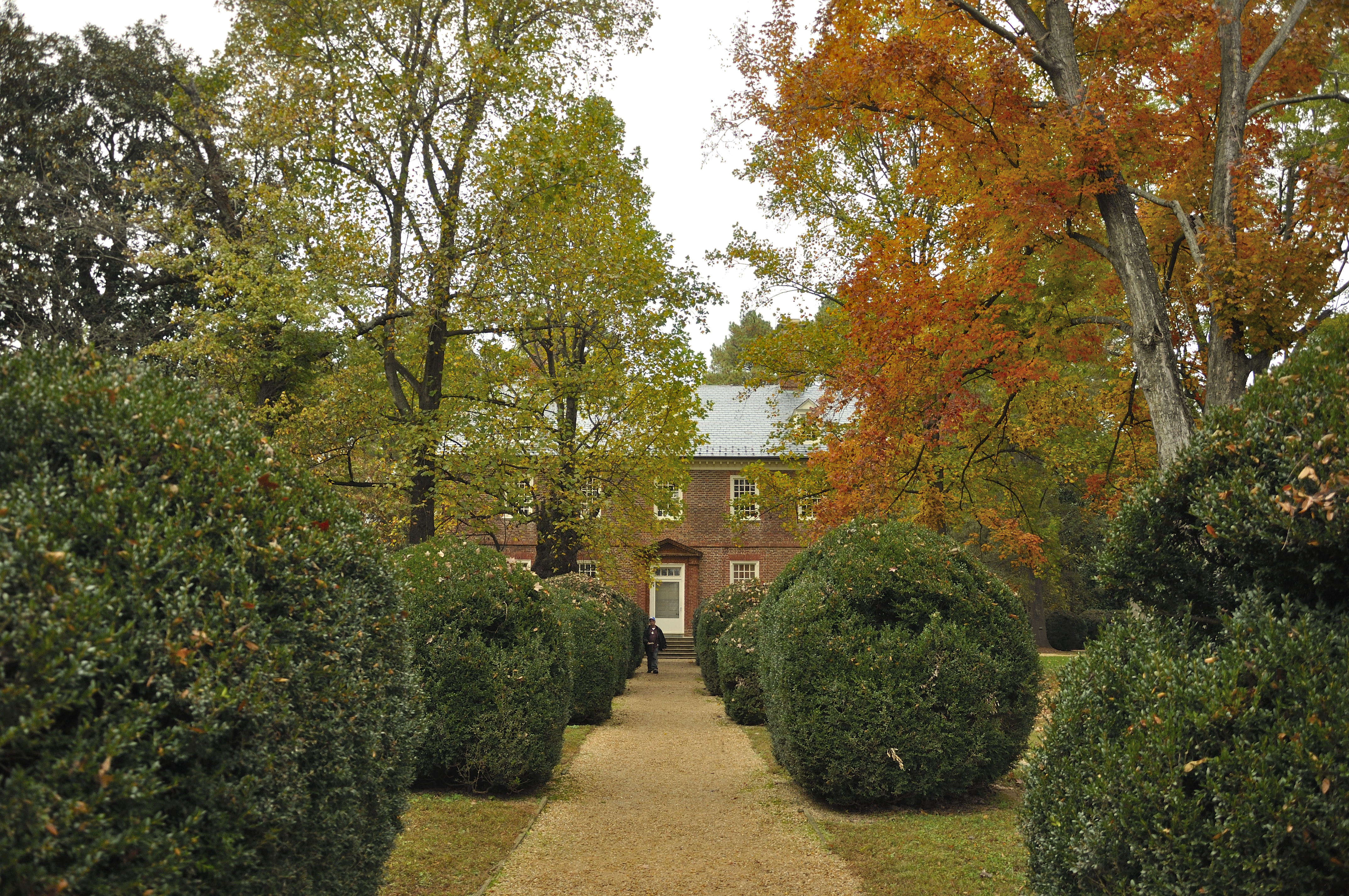
The roadside entrance to Berkeley Plantation’s manor house.

Virginian’s are rather proud of their history, and they should be. So, when some New Englander tries to impose their faulty history on us, we shout back with facts. One such fact is that the first Thanksgiving in the New World did not take place at Plymouth Bay Colony, Massachusetts. It took place on the Berkeley Hundred, or what is today known as the Berkeley Plantation on the James River. A group of 35 settlers under Captain John Woodlief disembarked the Margaret on December 4, 1619 to hold a Thanksgiving service a full year before the Plymouth Bay colonists landed in New England, and more than two years before the Pilgrims celebrated their famous festival.

Berkley_013
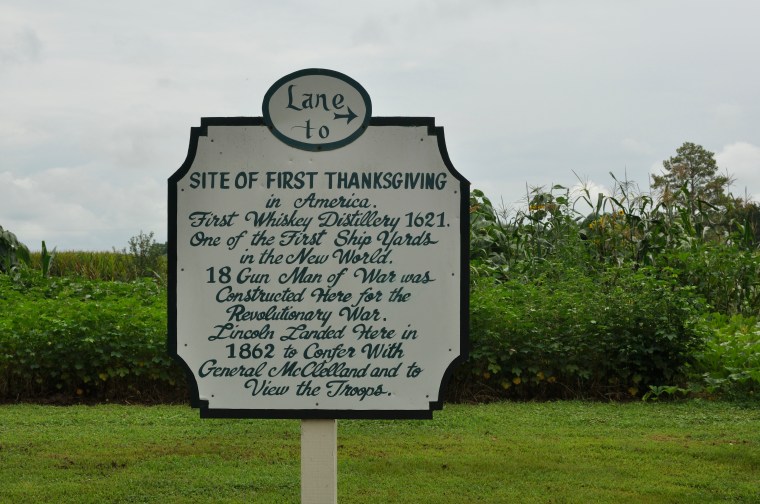
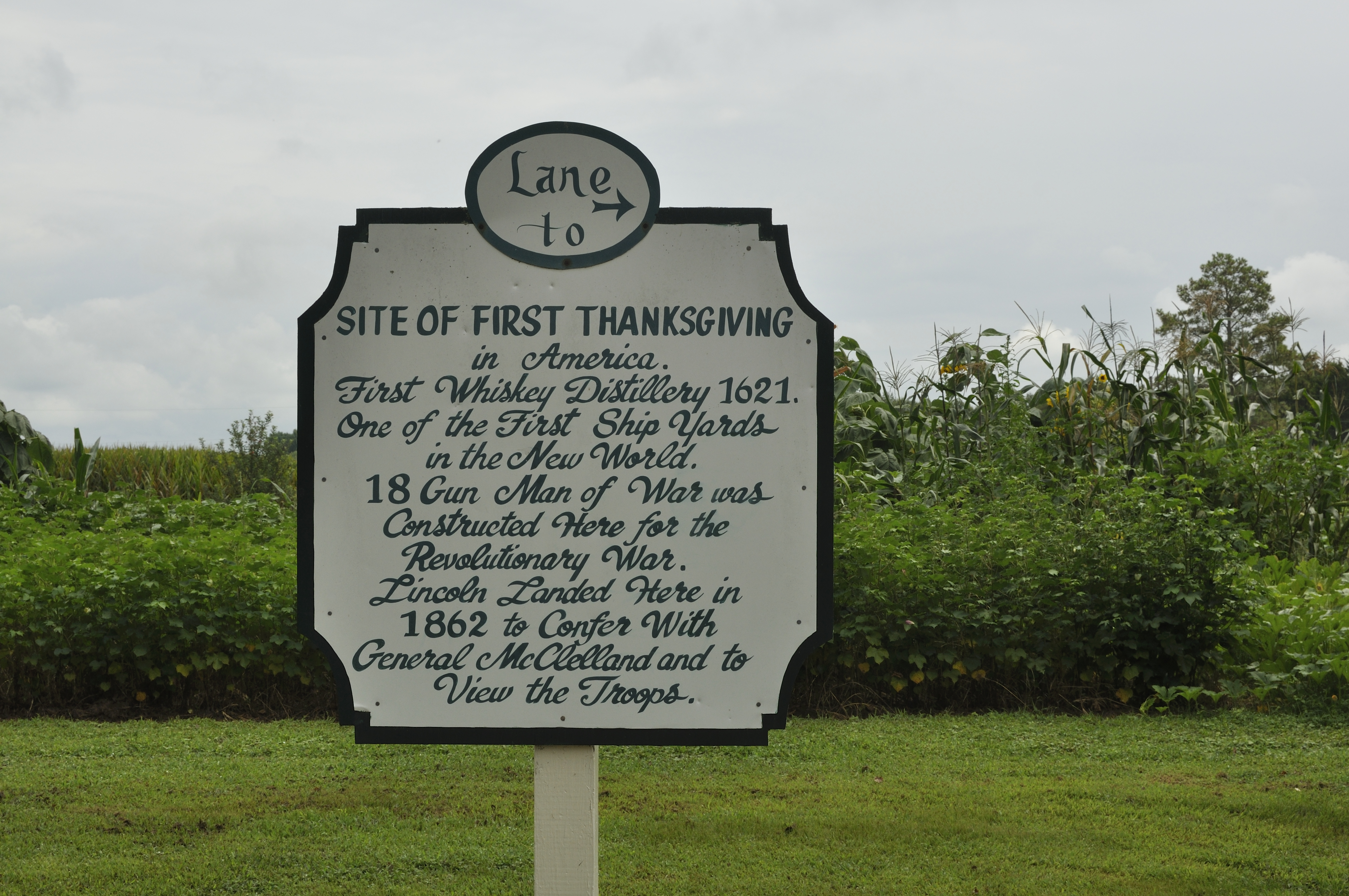
Berkeley claims to be America’s “Most Historic Plantation”, and with good cause. This sign list just a few notable events to have taken place on the grounds.

To honor the event the elegant Berkeley Plantation celebrates the First Thanksgiving on the first Sunday of November every year. This year, my wife and I plan to attend. It should be a treat for the both of us. For her, because she’s never been to Berkeley. For me, because I fell in love with this James River Plantation the second I set eyes upon it. I will add more pictures in future posts, but in advance of the weekend’s festivities, I wanted to share a few pictures I took while on a history trip with my friend Brandon last year. Enjoy, and if you also attend this weekend’s Thanksgiving, feel free to say hello!

Berkley_047
Crops, such as corn and soybeans are still harvested every year, as they have been for centuries along the James River.

*For more information about this weekend’s events at Berkeley Plantation, please visit this link.

**All pictures are from my personal collection, and are copyrighted by Robert Van Ness, 2015.

England’s First Virginia Attempt – Roanoke Island, “The Lost Colony”

I am one who believes that Virginia’s English History began in present day North Carolina at Roanoke Island, not at Jamestown further north. Borders came later. But to be fair, Jamestown was the first permanent, successful English settlement in the New World. Yet before Jamestown’s permanence, another colony was attempted – Fort Raleigh on Roanoke Island. In anticipation of the History Channel’s program Roanoke: The Search for the Lost Colonywhich airs tonight, October 26,2015, I wanted to share a few pictures from a history trip I took in July, 2015.

_DSC0006
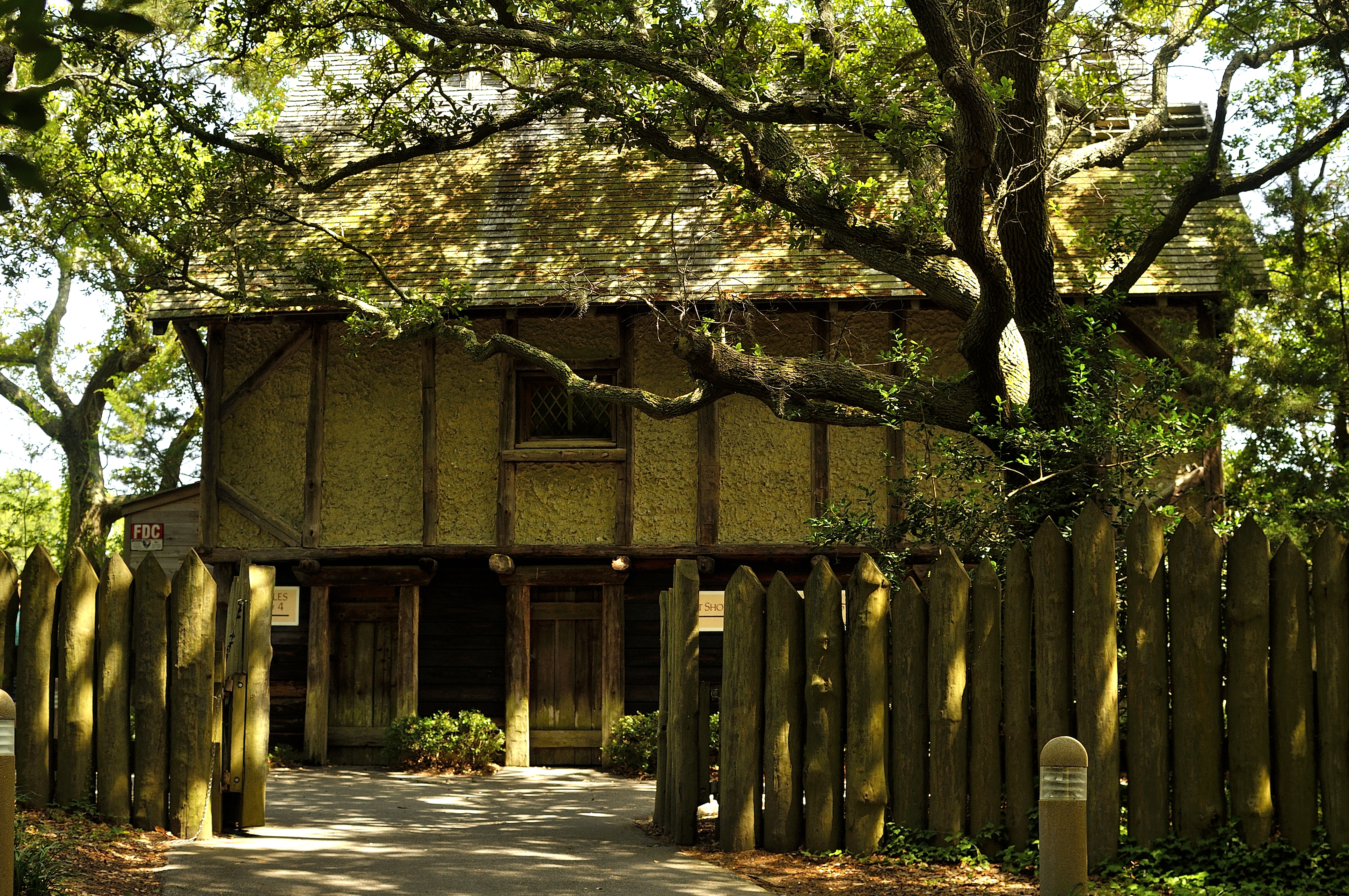
Ceiling detail in the Tudor inspired room at Fort Raleigh.
_DSC0009
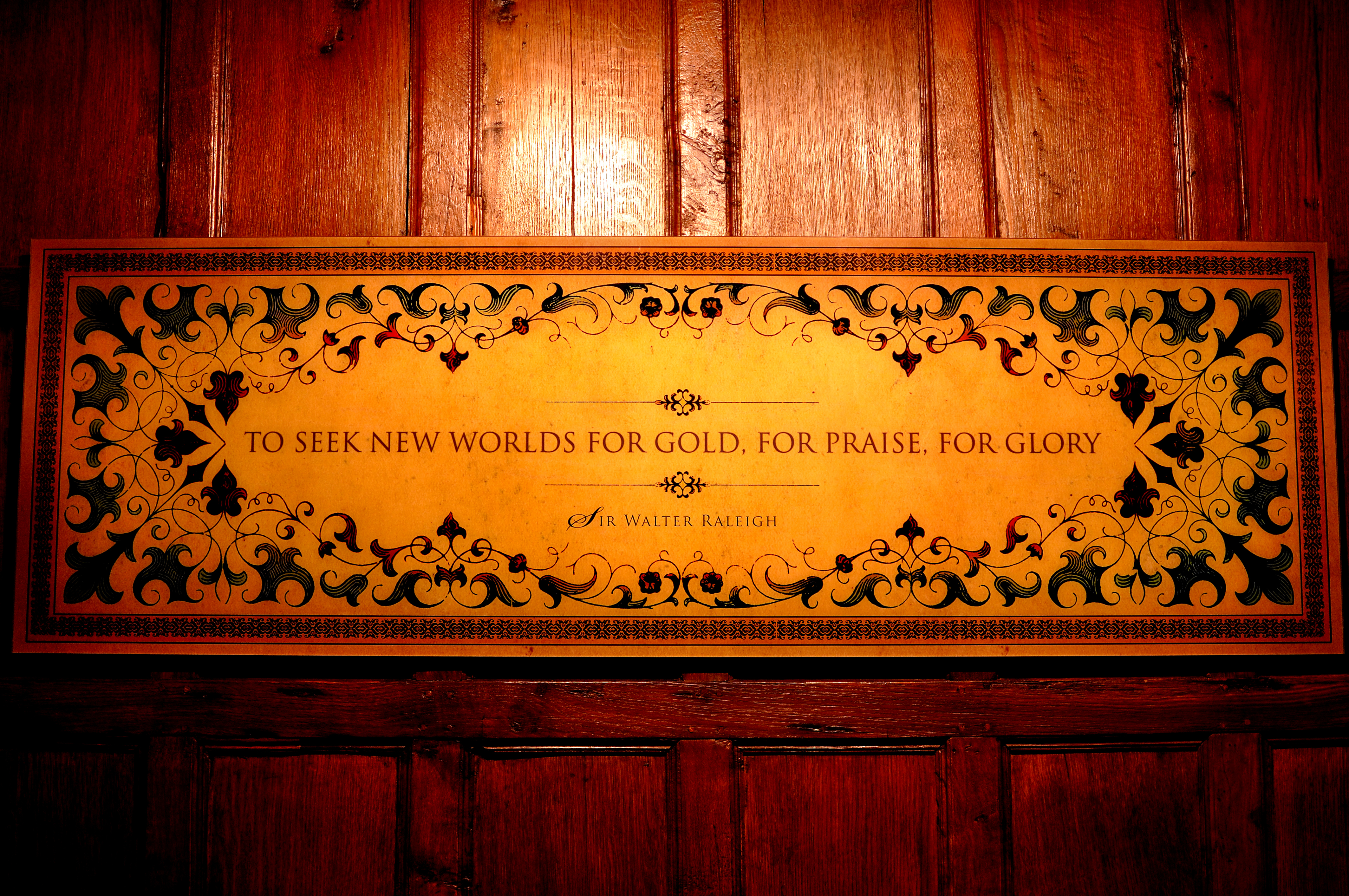
The British, as well as other European powers, had something akin to this Sir Walter Raleigh quote as their exploring/colonizing inspiration. Raleigh, in particular, was trying to impress Queen Elizabeth I.
_DSC0011
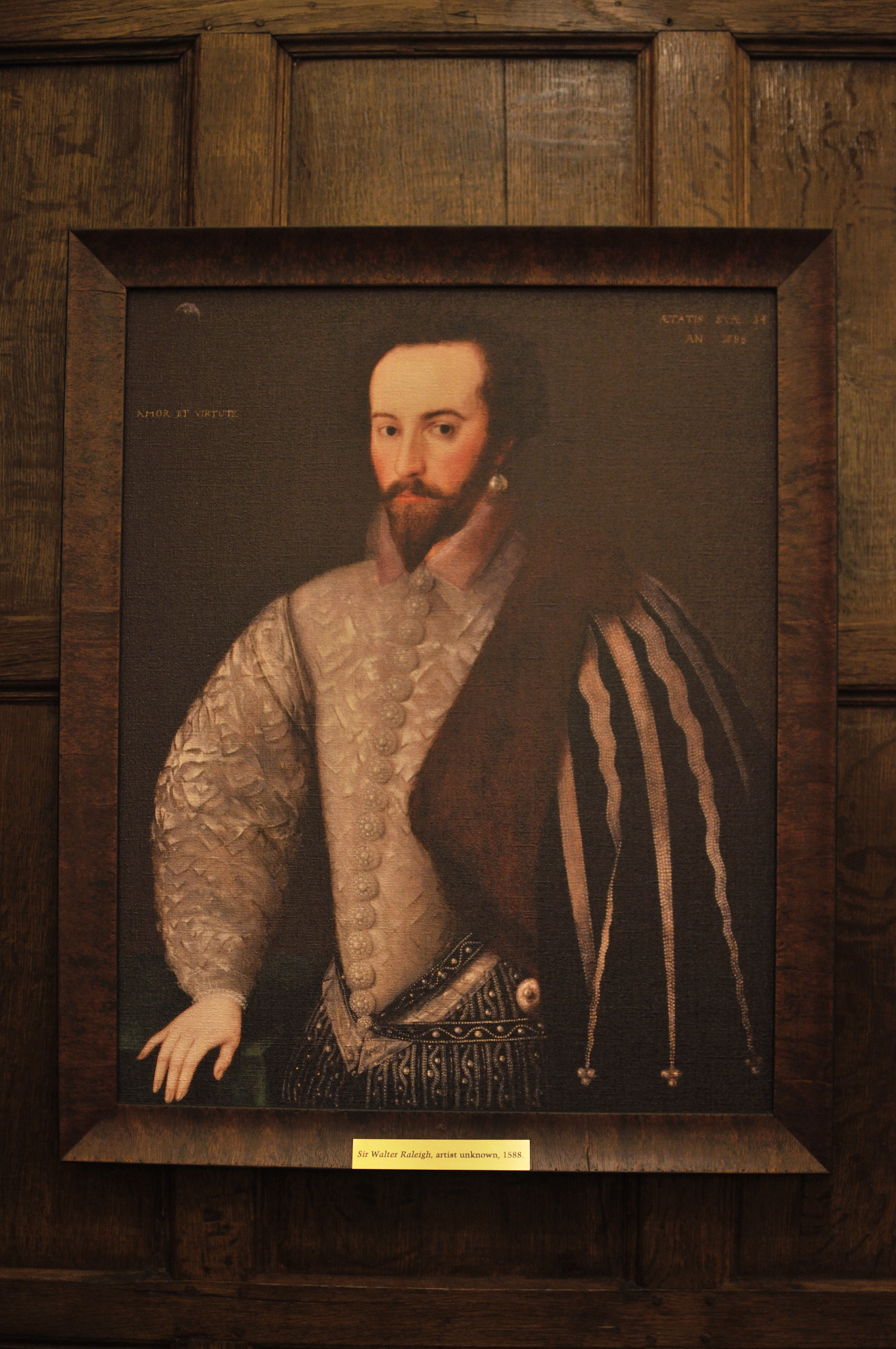
Sir Walter Raleigh dressed in his 16th Century finest.
_DSC0022
The present day sight of Fort Raleigh has many walking trails, such as the one being traversed by my oldest son.
_DSC0023
The reconstructed earthwork remains of Fort Raleigh, note the rebuilt palisade just right of center.
_DSC0031
In 1937 Paul Green staged his play “The Lost Colony” on the shores of Manteo. It has been in production ever since, drawing such attention from viewers far and wide, even President Franklin D. Roosevelt.
_DSC0042
The stage used for “The Lost Colony” play.
_DSC0048
Paul Green’s play even has a ship prop to mimic the English approach to Roanoke Island.
_DSC0050
The 115 Lost Colonists would have come ashore here on July 22, 1587.
_DSC0061
Manteo, for whom the island is named today, aided John White and the Lost Colonists.
_DSC0080
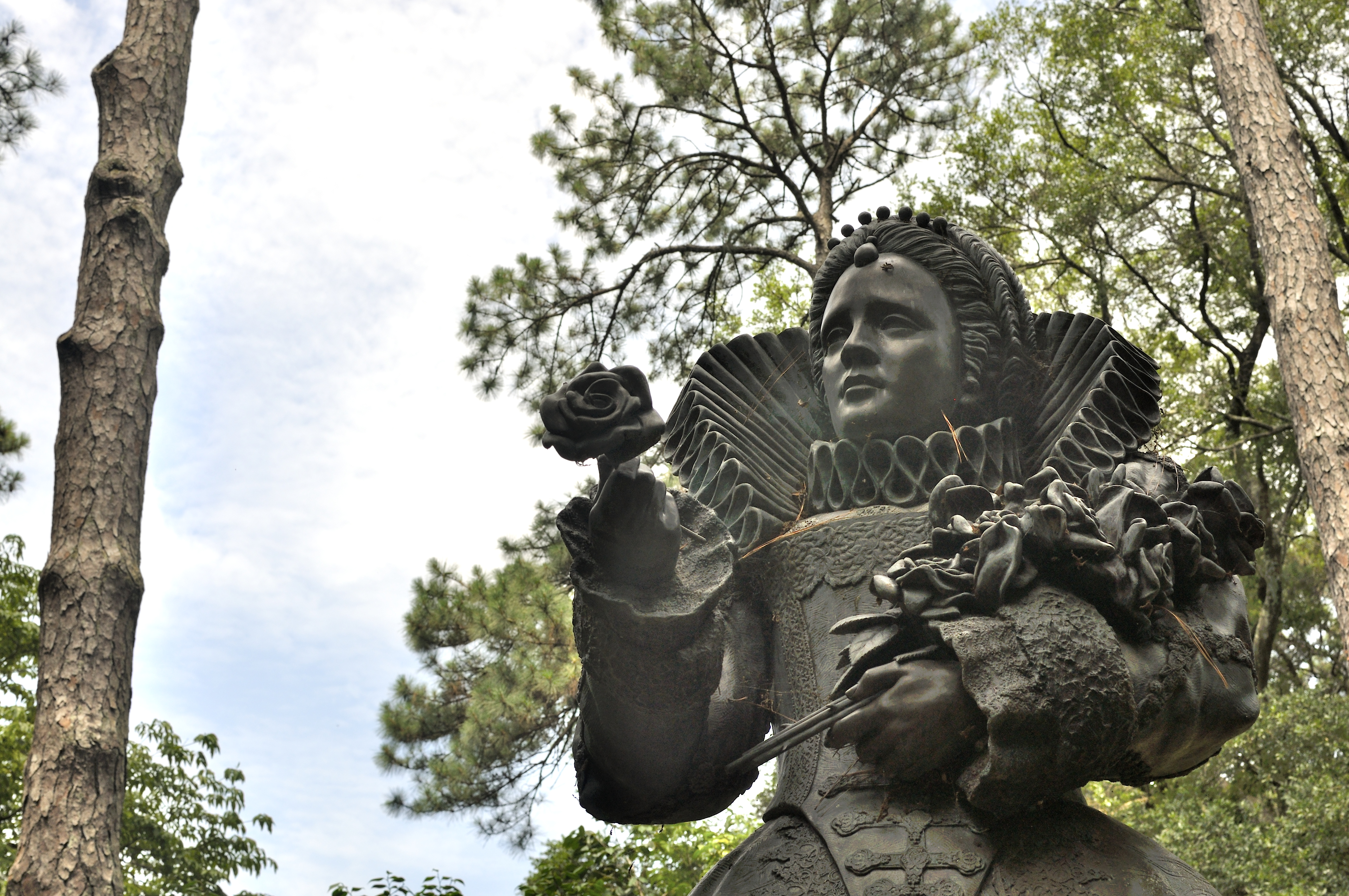
Also of note near Fort Raleigh is the Elizabethan Gardens, who has this statue of Queen Elizabeth I.
_DSC0089
Historians have pinpointed this area of the Elizabethan Gardens as being where they believe the Lost Colonists first came ashore in 1587. My youngest son loved it.
_DSC0112
A Hydrangea at the Elizabethan Gardens

For those interested in learning more about the Lost Colony, or perhaps wanting to visit, please, click on the links below. Once, I have my podcasting setup in place, I will briefly discuss events surrounding the Lost Colony, as well as the predominant mystery theories and archaeology being done to answer those theories.

Fort Raleigh National Historical Site

Elizabethan Gardens

Historian James Horn’s Lecture at the Virginia Historical Society

First Colony Foundation

National Geographic concerning the most recent Lost Colony discoveries.

*All pictures are from my personal collection, and are copyrighted by Robert Van Ness, 2015.

Welcome and Introduction

John Smith
Statue of Captain John Smith at Historic Jamestowne

Let me take a moment to introduce myself.

  • Who am I?

My name is Robert Van Ness. I’m a former high school history teacher, but now I manage a grain elevator in Southeastern Virginia. I’ve lived in Virginia most of my life, but I’m not a native Virginian. I was born in Florida, and came to the Old Dominion as a Navy Brat.

  • Why Virginia History?

I’ve studied and written about much history, but after having lived in Virginia for many years, I find no other region more endearing and enriching. It is my desire to share as much of that endearingly rich history as possible.

  • How will this project be undertaken?

History, let alone Virginian History, is an enormous subject. In an effort not to overwhelm both myself and the audience, my plan is to focus upon a linear approach. From time to time I may deviate from the path due to a history trip that may have been taken.

  • How will information be shared?

Information will be shared in two ways primarily – Podcast and Photography. Written blog posts may accompany both media, but at this point it will not be the focus. My goal is to upload at least one podcast a month, but I will be adding other content more sporadically (ie, as often as I take a personal history trip).

Finally, I’m not a professional podcaster or photographer by any means, and will greatly appreciate any suggestions and/or feedback that may be given. I hope what I offer is exciting, informative, and inspires you, my audience, to travel your region and find those same endearing and enriching adventures. If you happen to live in Virginia, I hope this work will add a greater love of the land we call home.