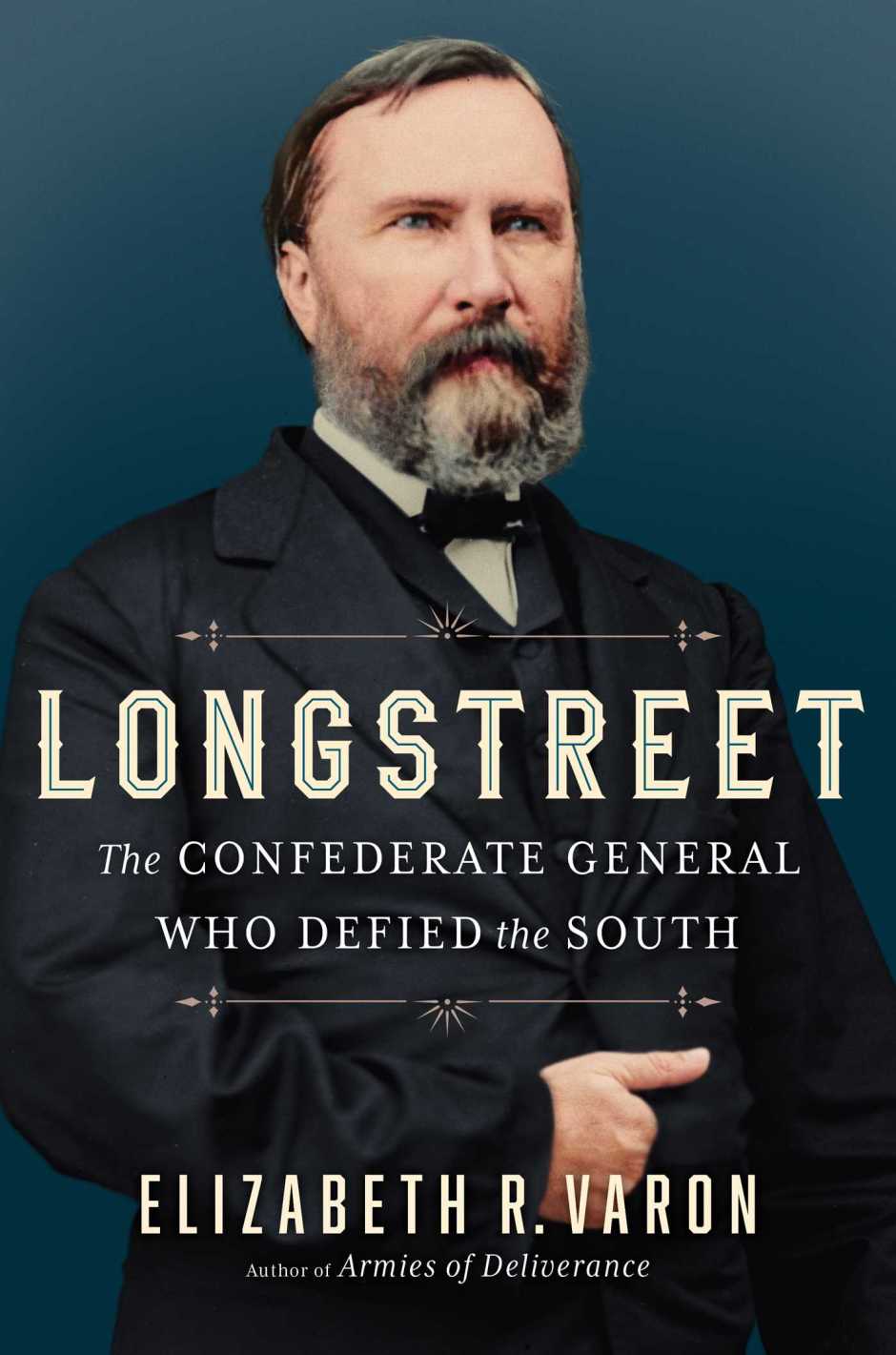
General James A. Longstreet is one of the most interesting figures emerging from the Civil War. He was Robert E. Lee’s “Warhorse” turned Gettysburg scapegoat. Longstreet was a staunch defender of the southern cause, who seemingly turned against the South after the War’s end. Because of his changed viewpoint, Longstreet was frowned upon by most of the South after the War.
Dr. Varon’s new book, Longstreet: The Confederate General Who Defied the South, focuses upon the important General’s life after the Civil War. She briefly illustrates Longstreet’s foundational years through his illustrious military career. Most Longstreet biographies tend to center most of their attention upon his four years serving as a General in the Confederate Army, understandably so. But as Dr. Varon mentions in our discussion, he had forty more years of life after the War’s end. What did he do with that time?
I trust you’ll find Dr. Varon’s answers to be as interesting as Longstreet’s life.
LINKS TO THE PODCAST:
Elizabeth Varon Books:
Longstreet: The Confederate General Who Defied the South. New York: Simon and Schuster, 2023.
Southern Lady, Yankee Spy: The True Story of Elizabeth Van Lew, a Union Agent in the Heart of the Confederacy. New York: Oxford University Press, 2005.
Armies of Deliverance: A New History of the Civil War. New York: Oxford University Press, 2019.
Disunion!: The Coming of the American Civil War, 1789-1859 (Littlefield History of the Civil War Era). Chapel Hill, NC: UNC Press, 2008.
Appomattox: Victory, Defeat, and Freedom at the End of the Civil War. New York: Oxford University Press, 2013.
We Mean to Be Counted: White Women and Politics in Antebellum Virginia (Gender and American Culture). Chapel Hill, NC: UNC Press, 1998.
All photography used on this site is owned and copyrighted by the author unless otherwise noted. The Featured Image is of Longstreet: The Confederate General Who Defied the South.
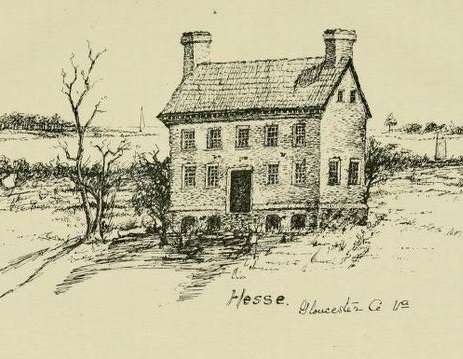
Perhaps the Armisteads, pronounced “Ahmi-steyud” by colonial Virginians, are not the most important First Family of Virginia, but their impact is without question. They feature in most First Family genealogies, including two presidential lines the Tylers and Harrisons. They also have ties to other important figures such as Robert E. Lee and Robert “King” Carter to name a few.
Beyond family connections, the Armisteads were involved in settling along early Hampton and Norfolk as well as the Middle Peninsula, where the main family branch settled. Soon thereafter, the Armisteads were involved in not only Virginia, but also Maryland, and then North Carolina, before they started to spread south and westward into the evolving United States.
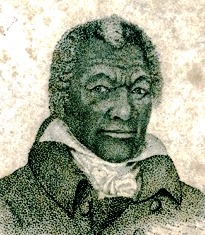
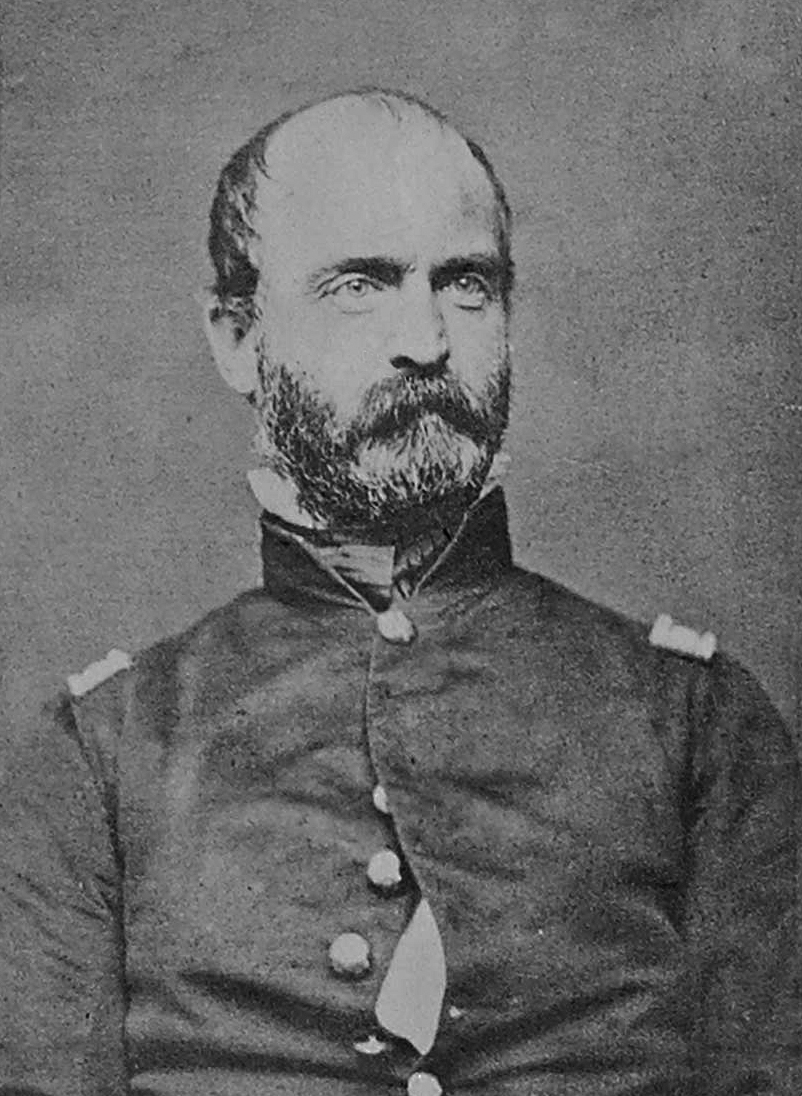
Along the journey, Armisteads featured in all of early America’s Wars from Independence to 1812, Mexico, and the Civil War to name a few. The most notable figures from those conflicts were William and his slave James, George, and Lewis Armistead respectively.
The Armisteads did more than fight America’s wars; however, they helped unite leading families, and build a Commonwealth as well as a newly formed Country. For that, their inclusion in the First Family list is undeniable.
Music used for the first episode – Louis Armstrong and the Mills Brothers,”Carry Me Back to Old Virginia” available on Apple Music, and “The Crossing” performed by The East Pointers, also available on Apple Music.
Writing Virginia’s history has a long history itself reaching back to the 17th century. Telling those stories has evolved and expanded in various ways during the past 400 years reflecting differing angles, viewpoints, and ideologies. Brent Tarter’s work is part of that long history, and he adds a new volume in which he attempts to give voice to those differing angles and viewpoints.
The volume in focus is entitled Virginians and Their Histories, a title meant to highlight the people who make Virginia’s story what it is. Tarter draws from decades worth of research work to bring this book together. It’s such a work that when Mr. Tarter and I discussed doing an interview, it soon became apparent that one recording wouldn’t do his work justice. To that end, here is the third installment, which covers the end of the Civil War period up until contemporary times.
Freedom and Salvation was found at Fort Monroe for many former slaves.
I love traveling all over Virginia. Finding off the beaten path locations, eating at local dives, learning poignant stories combine to make each trip memorable. Sometimes, however, I don’t have to travel to experience all that Virginia has to offer. Sometimes it’s in my back yard. That’s the case with Fort Monroe.
Fort Monroe’s story spans more than 400 years, even longer if one includes what we know of the native Kecoughtan tribe. The original Jamestown colonists first met the Kecoughtans in Spring 1607 before the colonists sailed up river to establish Jamestown. The colonists came back, established friendly relations, and over time built a series of lookout posts that endured through some hardest struggles that the colonists suffered.
That colonial outpost became the port of entry for one of America’s great peoples. In 1619 “20 and odd negroes” from Angola arrived signaling the beginning of a new era in Virginia and America’s history. That history hasn’t always been laudable as those original settlers built new lives and saw their progeny forced into slavery by as early as the 1640s. Those slaves and their stories have left a deep imprint not only on Virginia’s historical landscape, but on her physical makeup as well.
Point Comfort and her early fortifications developed into more permanent bastions in the early 19th century, largely aided by slave labor. After the British marauded the Chesapeake Bay region and burned Washington DC during the War of 1812, the sorely embarrassed government undertook a series of forts built to ensure such an invasion would never happen again. Fort Monroe was the keystone in that military wall.
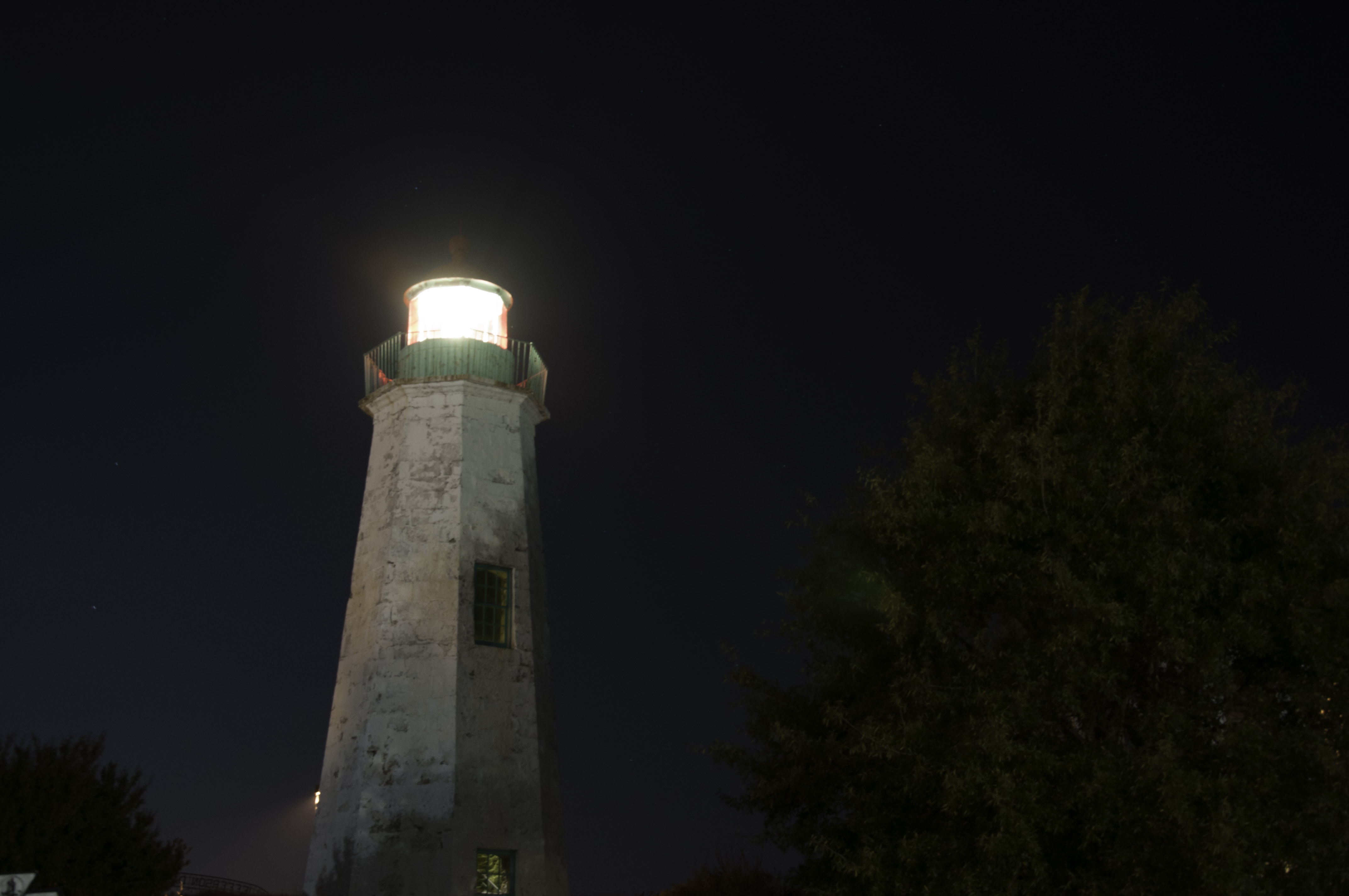
Old Point Comfort Lighthouse at night
The best military engineers of the day, including Robert E. Lee, descended upon Hampton to build the stone structure, as well as her sister fort known then as Fort Calhoun, but now known as Fort Wool, just off of Point Comfort’s coast.
These engineers were so successful that when the Civil War exploded onto history’s pages the Union maintained control of Fort Monroe, and never endured a serious threat to losing control of the strategic location.
Because the Union kept control they could use the fort as a starting point of major campaign thrusts toward Richmond. But the fort was also used for something else. Area slaves viewed Fort Monroe as potential salvation. Freedom.
On one May 1861 night three slaves tested their fate. They got into a skiff near Sewell’s Point, Norfolk, and rowed across the dangerous Hampton Roads waterway to reach Fort Monroe.
The Fort’s commanding officer, Benjamin Butler, had just been installed a day earlier, and now he had a decision to make. Butler was a lawyer from Massachusetts. He knew full well the law stating that runaway slaves were to be returned to their masters under the Fugitive Slave Law, but in a history changing decision, Butler decided to keep the runaway slaves as “contrabands of war.”
Word of Butler’s decision spread, and many more slaves poured into “Freedom’s Fortress” throughout the war.
After the Civil War ended, the region’s blacks largely remained. They started schools, notably built upon Mary Peake’s pioneering work, some of which was done in Fort Monroe before her 1862 death.
The American Missionary Association brought black and white leaders together in 1868 to formalize education by starting the Hampton Normal and Agricultural Institute, today’s Hampton University. Their mission was to teach and train freed black slaves, which attracted attention far and wide, perhaps most famously, Booker T. Washington.
Because of new opportunities, America’s black history, beginning in 1619, could now be seen as beginning anew in the 1860s, and it still centered at Point Comfort. The shining monument to that storied history is Fort Monroe, “Freedom’s Fortress.”
1619 was the beginning of Black History in English North America. That history began here at Point Comfort.
Lee’s Quarters, as seen from Fort Monroe’s South Wall
Lee’s Quarters
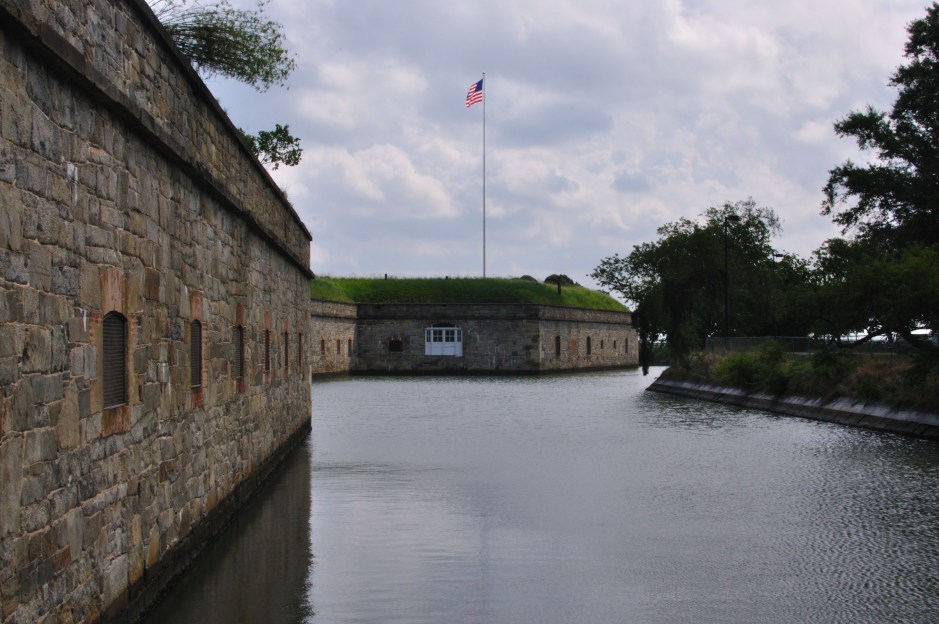
Fort Monroe’s Southeastern wall and moat
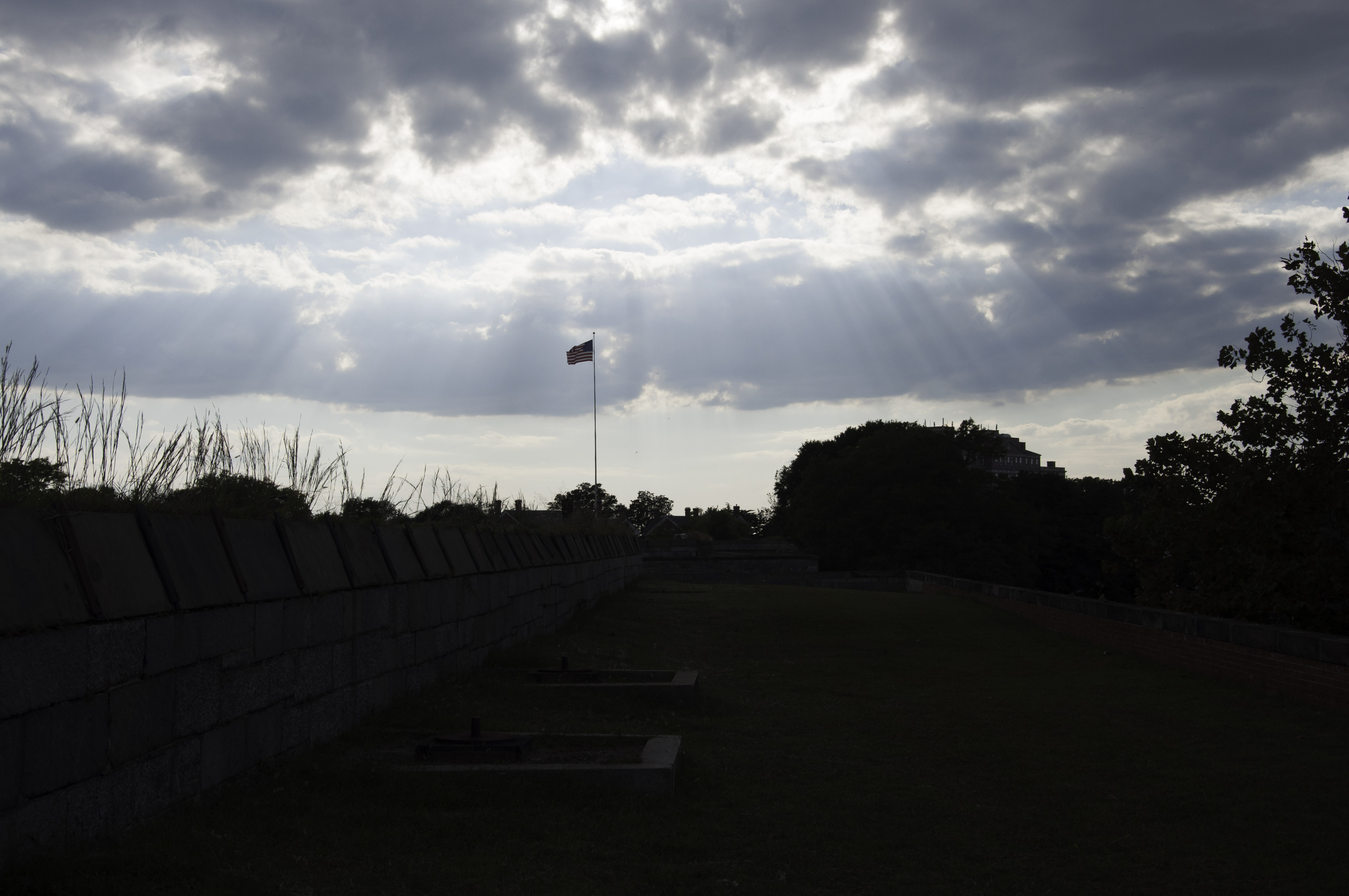
Gun emplacements atop Fort Monroe
Quarter’s #1, where Lincoln stayed while visiting Fort Monroe
The “Lincoln” gun
Entrance to Fort Monroe’s Casemate Museum
Casemate Museum at Fort Monroe
Harriet Tubman honored at Fort Monroe
Edgar Allan Poe at Fort Monroe
Inside Fort Monroe’s Casemate Museum
Jefferson Davis Park
The Jefferson Davis Exhibit at Fort Monroe’s Casemate Museum
Jefferson Davis Jail Cell at Fort Monroe
Inside Jefferson Davis Jail Cell at Fort Monroe
Examples of the types of shells used at Fort Monroe
A recreated watering hole at Fort Monroe’s Casemate Museum
A cargo ship passes Fort Monroe and her outer defenses at Hampton Roads
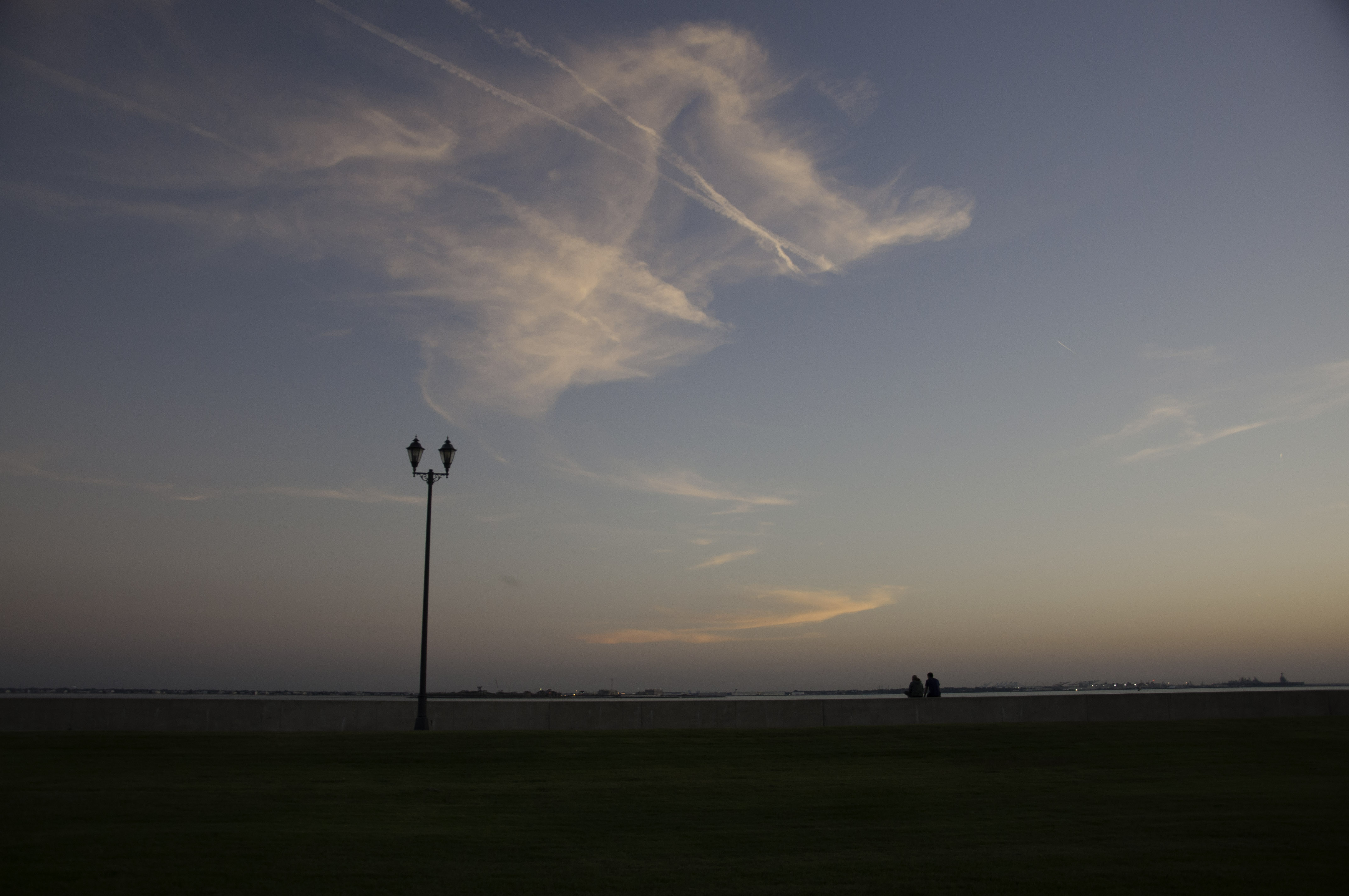
Couples enjoying the boardwalk outside of Fort Monroe’s walls
All photography used on this site is owned and copyrighted by the author. The featured image is of Fort Monroe as seen from the North Sallyport.
Music used for this episode – Louis Armstrong and the Mills Brothers,”Carry Me Back to Old Virginia” available on iTunes, and “Egmont Overture” by Ludwig von Beethoven, performed by the Chicago Symphony.
Virginia has certainly had her fair share of outstanding historical figures, both men and women. In this interview, the Library of Virginia’s Dr. Sandra Gioia Treadway and I discuss just 5 of the many important women to have graced our storied past.
Women highlighted in this episode are –
Cockacoeske
Anna Maria Lane
Elizabeth Van Lew
Caroline Putnam
Mary Jackson
These women were daring, powerful, and brilliant. Tune in to hear what made them great!
Anna Maria Lane Marker in Richmond, Virginia
Elizabeth Van Lew’s Grave at Shockoe Hill Cemetery, Richmond, VA
Mary Jackson’s Grave at Bethel AME Church, Hampton, VA
The Pamunkey Frontlet, presented to Cockacoeske as a gift from King Charles II
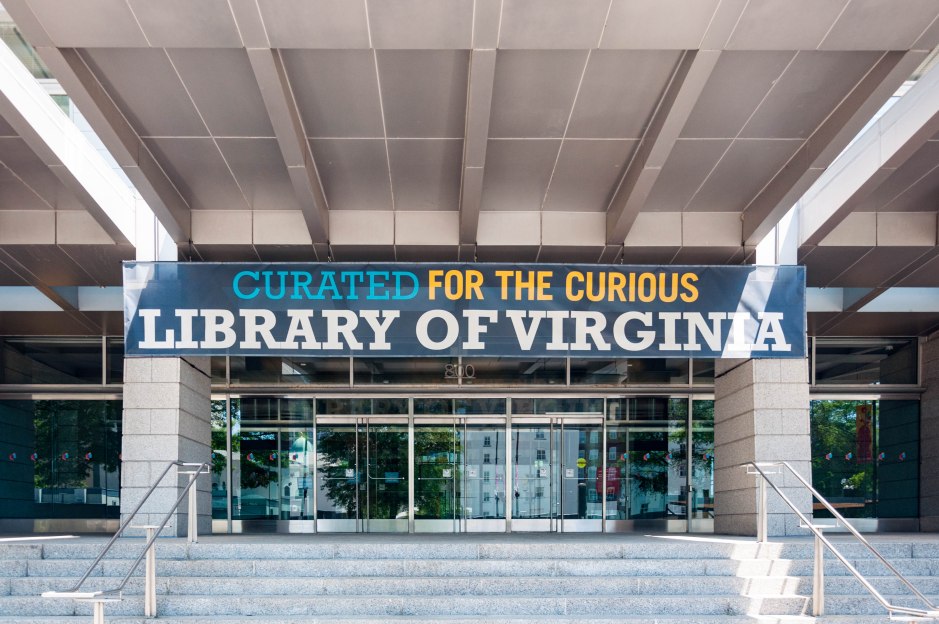
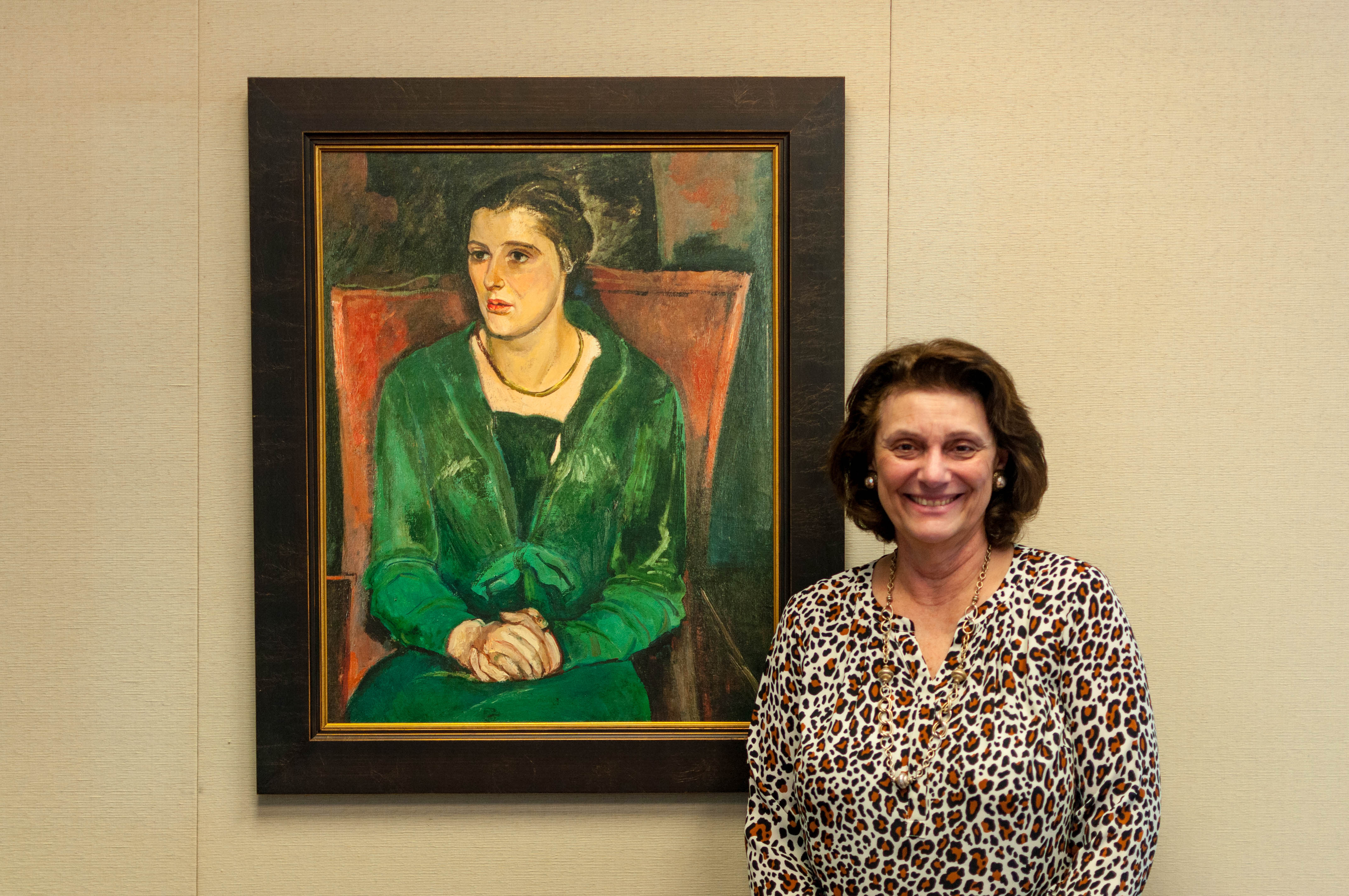
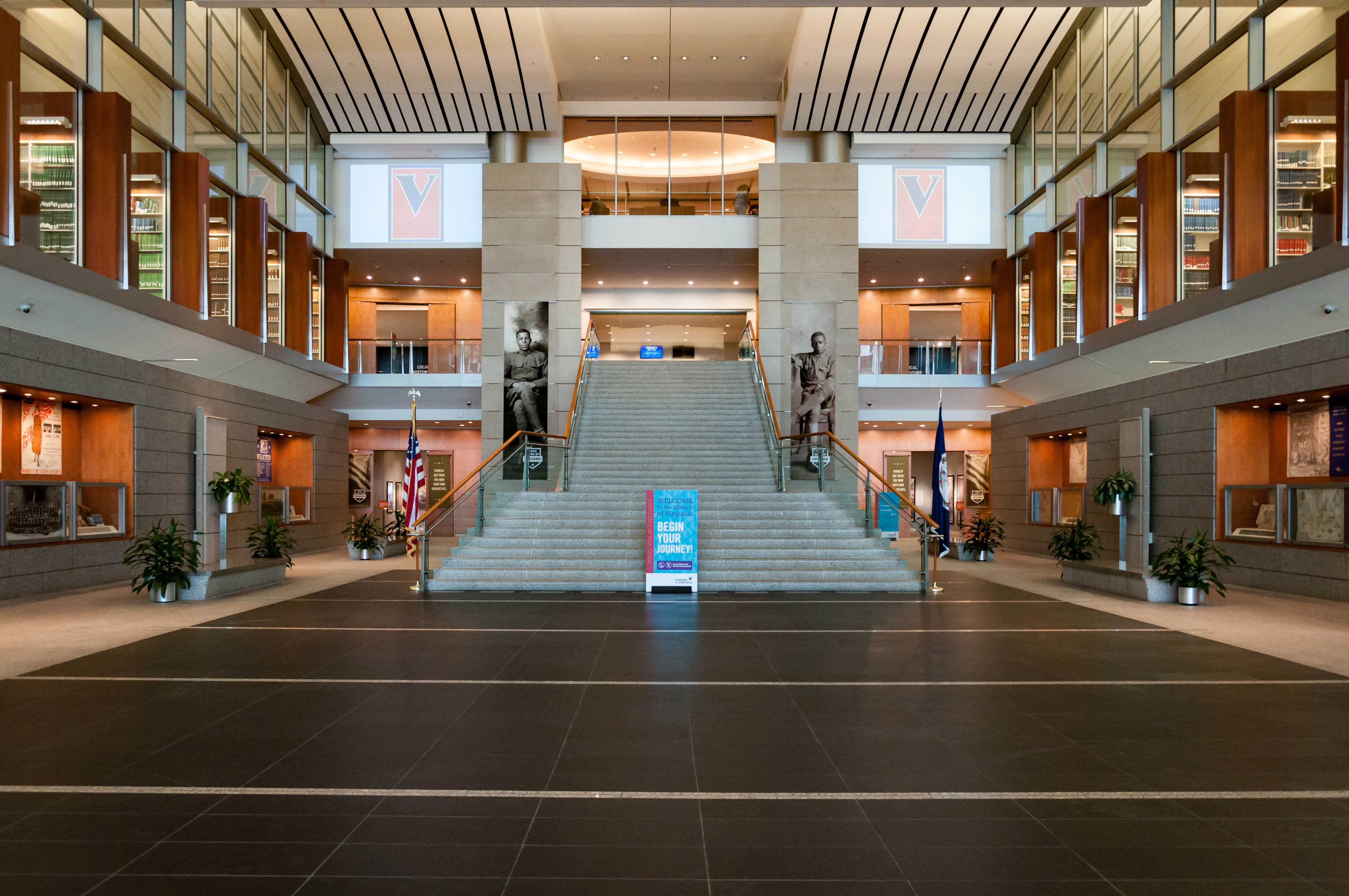
All photography used on this site is owned and copyrighted by the author. The Featured Image is of The Library of Virginia, Richmond, VA. The Caroline Putnam portrait can be found on Wikipedia.
Music used for this episode – Louis Armstrong and the Mills Brothers,”Carry Me Back to Old Virginia” available on iTunes, and This Is a Man’s World by Postmodern Jukebox, featuring artist Morgan James, available on iTunes.











 Virginia History Podcast
.jpg)