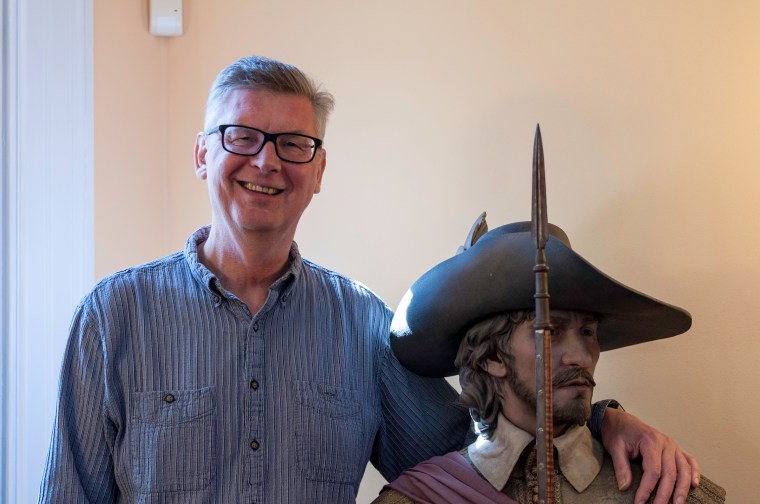
2019 Commemoration and I teamed up once again, and this time the podcast returned to Jamestown to interview Dr. James Horn.
Dr. Horn has made quite a name for himself in the history world with his most notable work being concerned with Colonial America. He is currently the President and Chief Officer at Jamestown Rediscovery Foundation at Historic Jamestowne in association with Preservation Virginia. Previously Dr. Horn served as Vice President of Research and Historical Interpretation at the Colonial Williamsburg Foundation, Saunders Director of the International Center for Jefferson Studies at Monticello, and taught at the University of Brighton, England for 20 years.
In addition to Dr. Horn’s considerable positions, he has written many books and articles which are cited often by leading academics and intellectuals alike. In October 2018 he is due to add to this already well-known body of work by publishing 1619: The Origins of American Society. Do, be on the lookout for that volume, as it promises to be a great addition to 1619 scholarship.
The Jamestown Rediscovery Team has been exploring this site, the home of William Pierce, where Angela, one of the first Africans to arrive at Jamestown, served.
The “Angela” site.
This was once a new styled living set up in the New Town section of Jamestown
No one saw this coming. Not in England or in Virginia. The English and Powhatan Tribes had been living quite peacefully together for almost a decade by 1622, but after both Pocahontas and Powhatan’s deaths a few years prior, Opechancanough had nothing standing in his way to stop him from enacting his murderous plan.
Opechancanough was not yet completely in control of the Powhatan tribes, but his authority was second to none. Opitchapam might have been the supreme Werowance, but everyone, English and Indian alike, knew who was in charge.
Diplomatic ties all went through Opechancanough, and those actions seemed to ensure that all was well in Virginia, but all wasn’t well, and when one of the Powhatan’s most iconic warriors, Nemattanew, or Jack of the Feather, was killed in March 1622 the mood changed. But the English completely missed the warning, and for that, they would suffer.
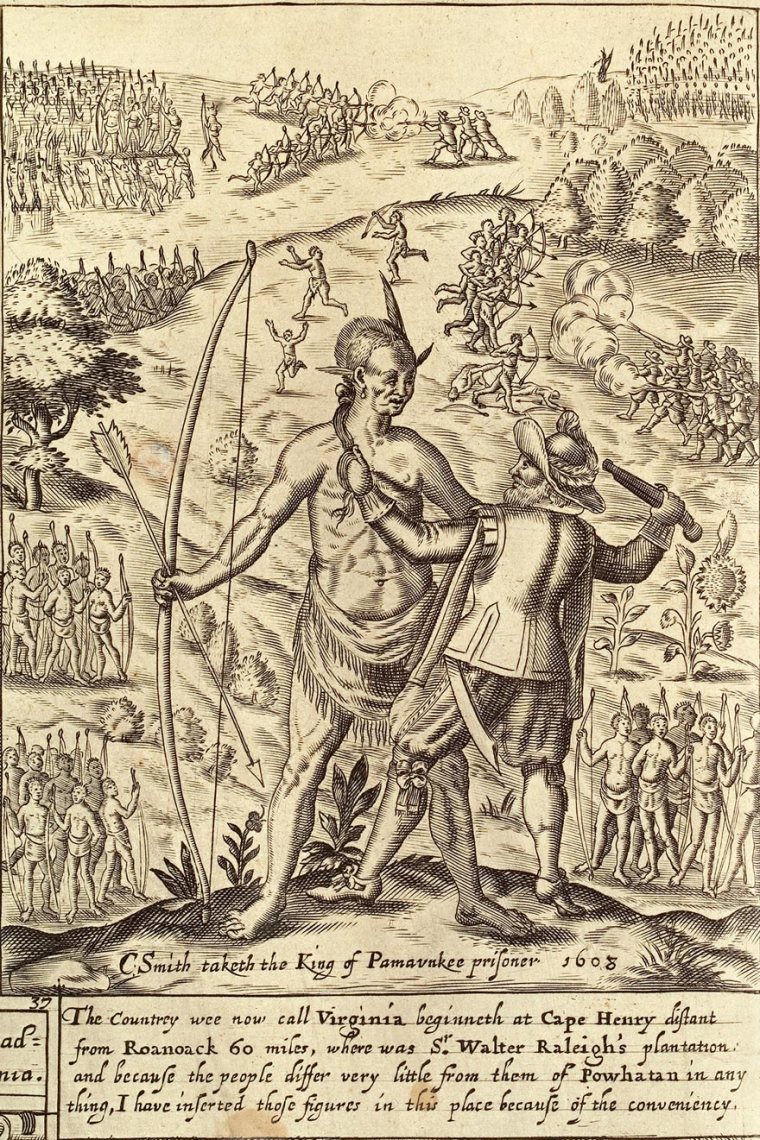
Opechancanough had tussled with the likes of John Smith, and now he surprised the English with a well-planned raid in 1622
Wolstenholme Town at Martin’s Hundred was among the hardest hit plantations on March 22, 1622
All photography used on this site is owned and copyrighted by the author. The Featured Image is of the Matthias Merian 1628 woodcut which depicts the 1622 Raid. The Opechancanough/John Smith encounter is from Smith’s own 1624 General History of Virginia. The final picture illustrates the destruction at Wolstenholme Towne.
Music used for this episode – Louis Armstrong and the Mills Brothers,”Carry Me Back to Old Virginia” available on iTunes, and “Trouble With Home” by Friendly Savages (ironically) also available on iTunes.
The Virginia Colony made great strides throughout 1619, and arguably the greatest was the formation of representative government, the first such government formed in the New World.
The Company didn’t want to loosen the reigns as freely as they did, but once the steps were taken, the representatives didn’t look back. John Pory guided the proceedings, which lasted 5 days from July 30 to August 4, and set the tone for future Virginian as well as American government into motion.
Because of this precedent, the House of Burgesses is a more than worthy topic of study, especially in that the original House is still with us today as the House of Delegates, the lower body of the Virginia General Assembly, and many great men sharpened their political acumen therein.
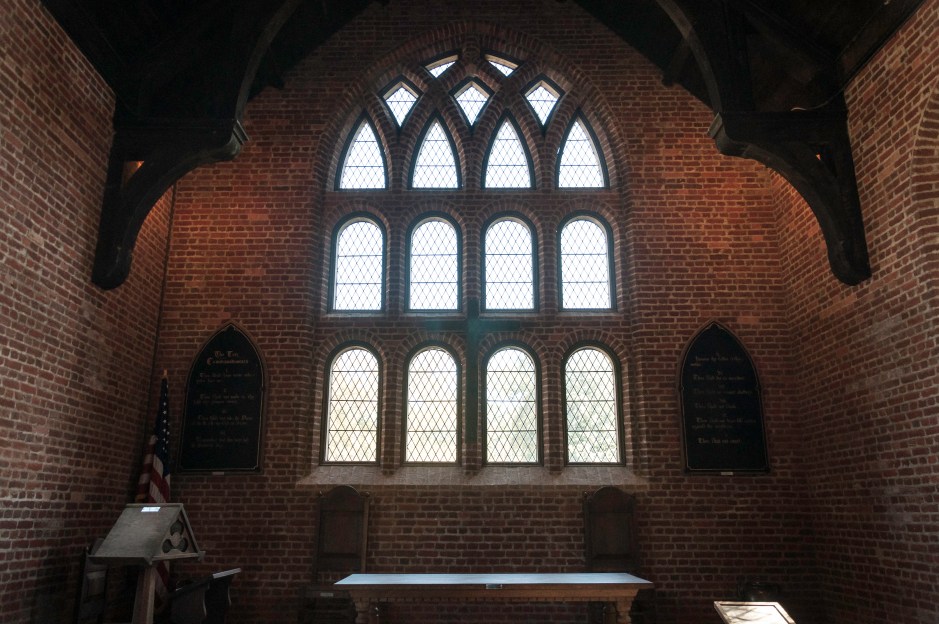
All photography used on this site is owned and copyrighted by the author. The Featured Image is of the current Jamestown Church’s Choir, where the first Assembly would have met.
Music used for this episode – Louis Armstrong and the Mills Brothers,”Carry Me Back to Old Virginia” available on iTunes, and “Below My Feet” by Mumford and Sons also available on iTunes.
I have written about, and even briefly mentioned the First Thanksgiving before, but this event deserves a stand-alone podcast episode.
For those who have not heard about the first English Speaking Thanksgiving in the New World, it started when a group of closely related English investors came together to plan a new life in Virginia.
They saw an opportunity to escape economic and religious hardships plaguing 17th Century England, enlisted a veteran Virginia settler, and shipped 35 settlers to an 8,000 acre land-grant on the James River in 1619.
Upon their arrival, the settlers offered their thanks to Almighty God as their first action at their new home, Berkeley Hundred. All of this was accomplished before their more famous counterparts, the Pilgrims, set sail in 1620.
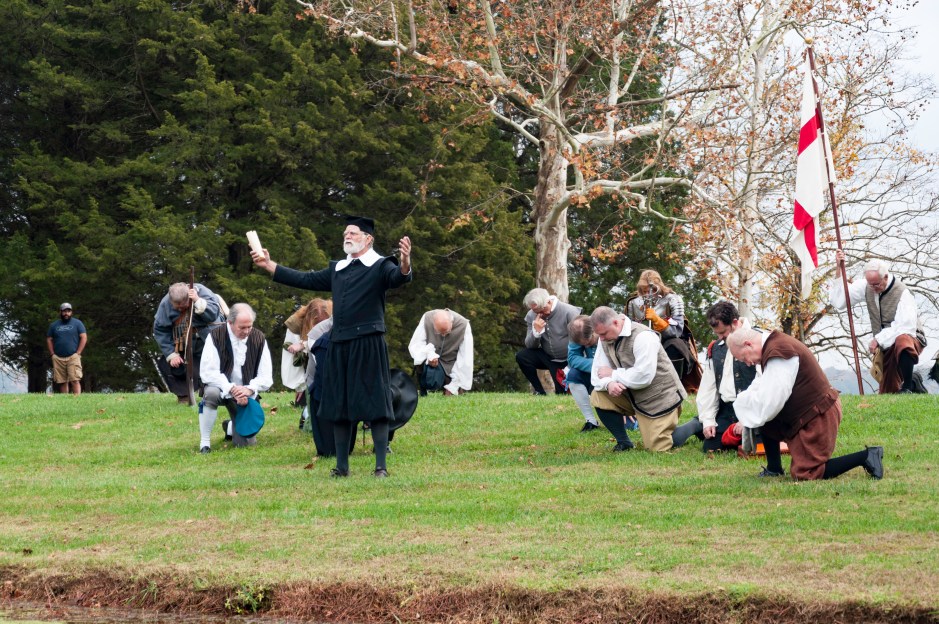
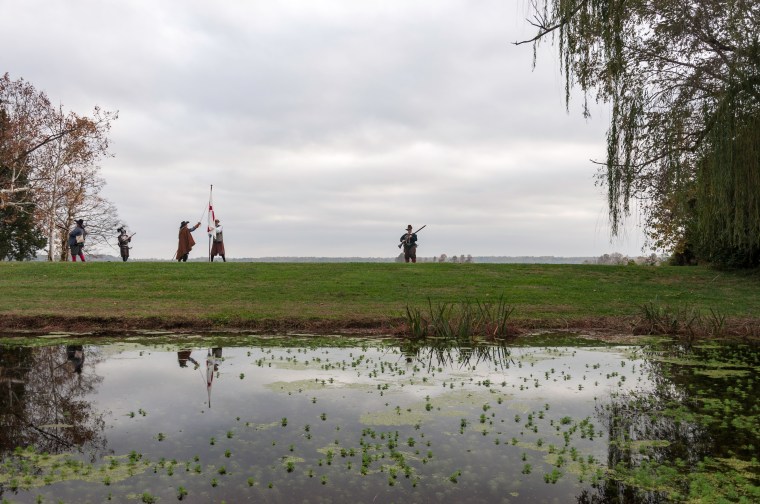
Berkeley Plantation’s Reenactment of Captain Woodlief and his men coming ashore to celebrate the First Thanksgiving in 1619
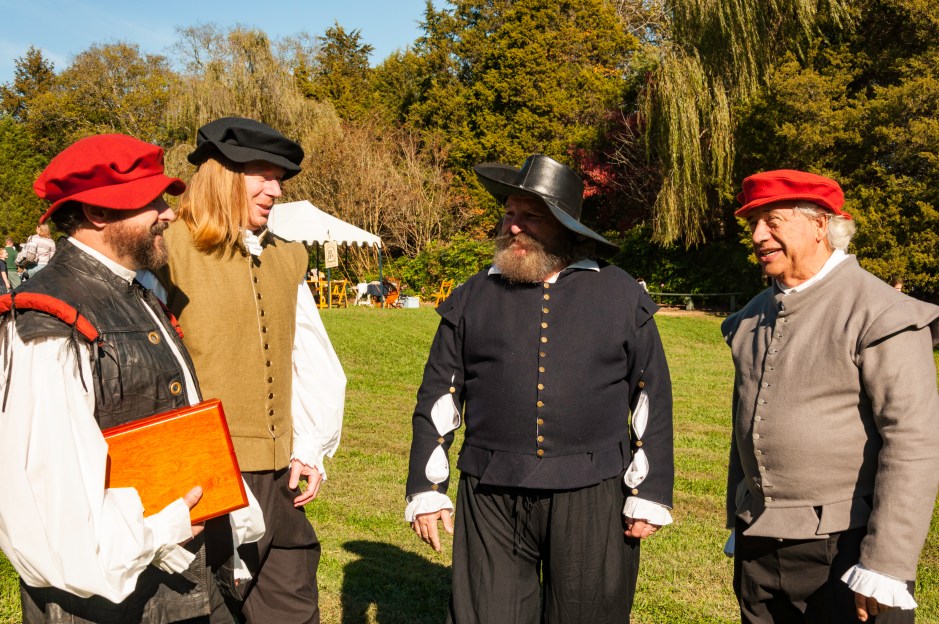
All photography used on this site is owned and copyrighted by the author unless otherwise noted. The Featured Image is of colonial re-enactors at the First Thanksgiving Festival, which takes place annually at Berkeley Plantation.
Music used for this episode – Louis Armstrong and the Mills Brothers,”Carry Me Back to Old Virginia” available on iTunes, and “Little Birdie” by Vince Guaraldi, also available on iTunes.
The most expansive plantation building phase along the James River exploded into life after the 1618 tobacco crop sold for an eye catching £5,000. At that moment the English knew that there was indeed something worthwhile to the Virginia venture.
Tobacco was certainly the increasingly powerful king in early Virginia, but the Virginia Company wanted to diversify. To that end, what would have been the first college in America, The East India School, was planned, the first ironworks at Falling Creek, was established, salt-farming on the Eastern Shore was set up, dozens of plantations dotted the James and Appomattox Rivers, settlers poured in to take advantage of new opportunities, and the first representative governmental assembly was formed.
There was a lot going on to be sure. But some settlers attempted to keep focused upon a more serious reason why they were undertaking such toilsome ventures, which is why another first took place amidst the continuing great migration. 35 settlers at newly formed Berkeley Hundred celebrated the First Thanksgiving on December 4, 1619.
This episode covers all of this and more. Have a listen!
Captain Christopher Lawne set up his plantation near this location at Lawne’s Creek
All photography used on this site is owned and copyrighted by the author unless otherwise noted. The Featured Image is of colonial re-enactors at the annual First Thanksgiving Festival, which takes place at Berkeley Plantation.
Music used for this episode – Louis Armstrong and the Mills Brothers,”Carry Me Back to Old Virginia” available on iTunes, and “Haunted” by Charlie Simpson, also available on iTunes.
Though Thomas Dale did not return to Virginia after his 1616 departure, he, along with John Rolfe, worked hard to encourage growth along the newly establishing James River Plantations.
Their work was greatly aided by Edwin Sandys, a rival to Thomas Smythe, the Virginia Company treasurer. Sandys’ ideas were not accepted by Smythe and his inner circle, but after years of rapidly accumulating debt, many in the Company thought a change was necessary.
Those changes began when the initial seven-year dividend promise from 1609 came due. The Company could not repay anyone’s investment, and in fact wanted to request more money. That’s when men like Edwin Sandys seized an opportunity.
Sandys and his followers wanted to offer property, private property, and that offering got the attention of hundreds throughout England.
Soon, investors, as well as adventurers seeking for a new life, began lining up to sail across the Atlantic.
Between 1616 and 1622 more than 8,000 settlers would risk their lives for a shot at prosperity deemed unimaginable in the Old World.
Dale received his often requested settlers at last, but Dale would not be there to see new plantations founded along the James River. Instead, other company men – Samuel Argall and George Yeardley, governors between 1616 and 1621, as well as many new investors, oversaw the massive transformation that forever changed Virginia and her history.
Today, Renwood Farms occupies Smythe’s Hundred, and is a vibrant part of Virginia’s agricultural establishment.
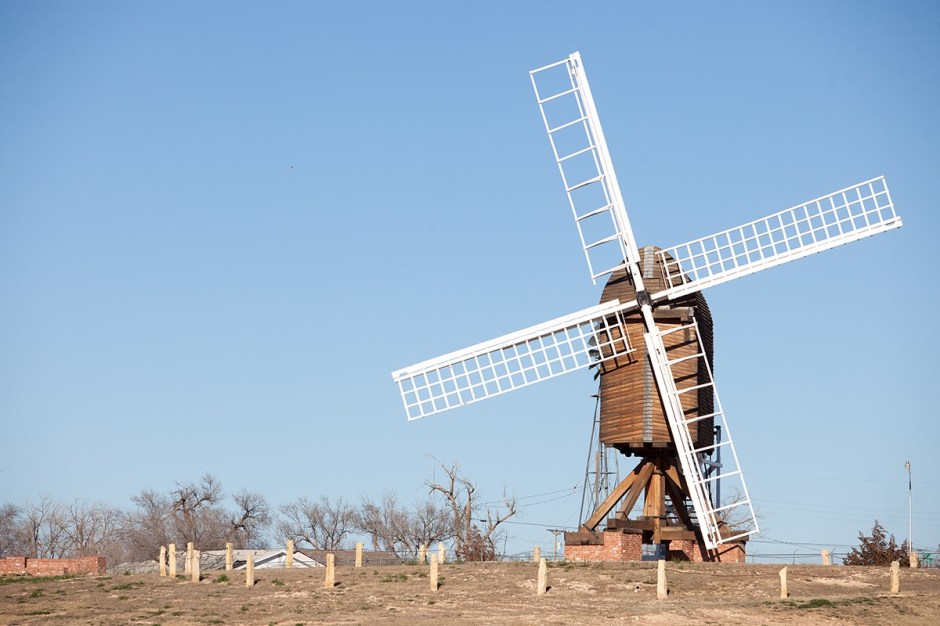
All photography used on this site is owned and copyrighted by the author unless otherwise noted. The Featured Image is the commemorative Flowerdew Hundred Windmill, which has since been dismantled and sent to Lubbock, Texas.
Music used for this episode – Louis Armstrong and the Mills Brothers,”Carry Me Back to Old Virginia” available on iTunes, and “Simple Gifts” by Kiner Brothers Music, available on Soundcloud.
Thomas Dale’s Virginia still suffered under his heavy-handed rule in the early 1610s, but the Rolfe/Pocahontas marriage as well as semi-relaxed private property laws began to have a noticeable affect upon the colony.
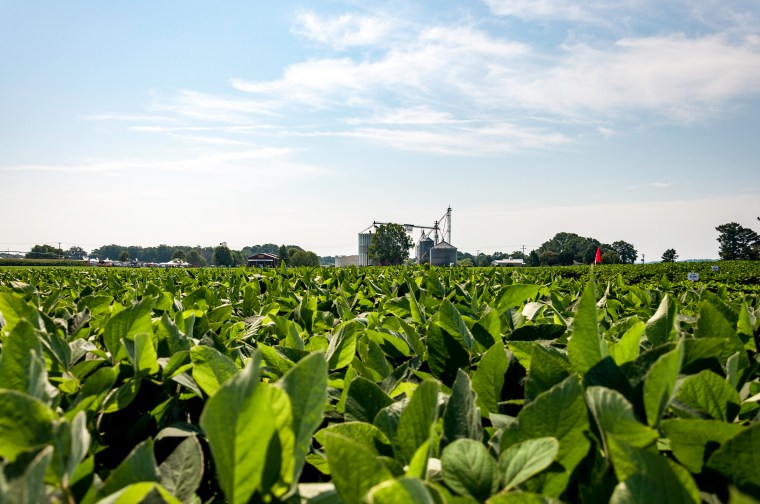
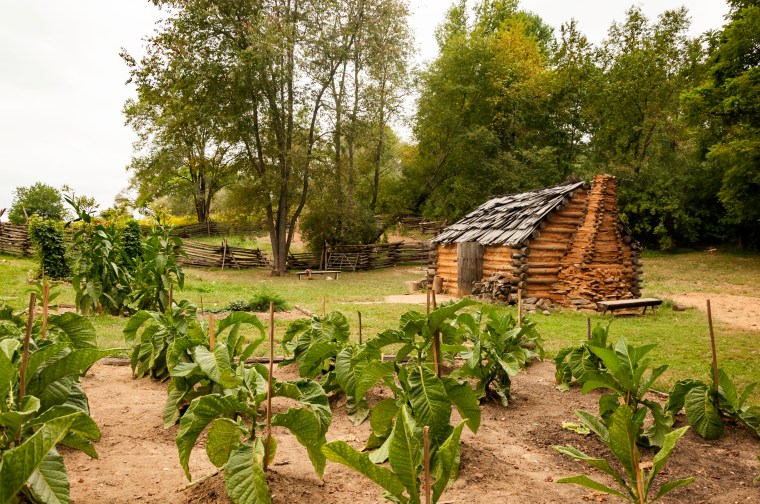
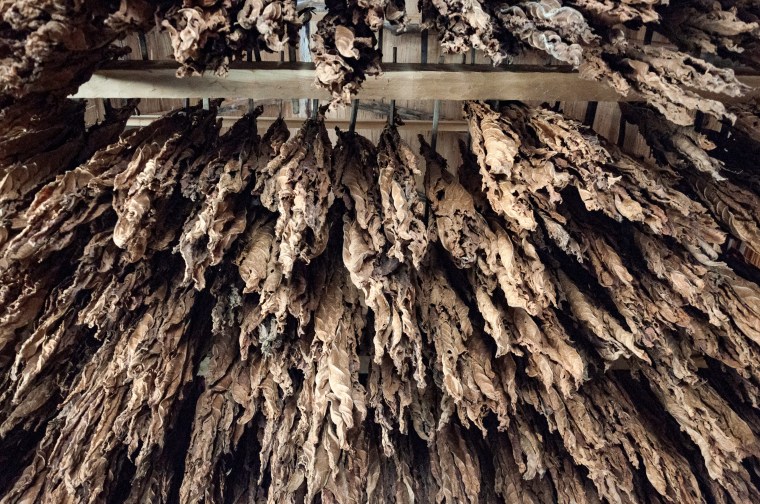
Rolfe took advantage of those newly relaxed laws by introducing a new tobacco strain, the Spanish, sweet-scented Orinoco along the James River. Soon after Rolfe’s successfully growing the weed, and sending a 1,200 lb crop to England, other Virginia colonists began growing the crop on the many plantations that sprung into life after 1613.
The Virginia Company began granting land to new settlers both old and new after Samuel Argall ascended to the Lieutenant Governorship. More than 30 plantations were founded upon which Tobacco became the chiefly grown crop. Virginia was now showing signs of profitability, and many believed it to be due in part to the Rolfe/Pocahontas marriage as well as Rolfe’s experimental work. They were now Virginia’s most famous people, and England wanted to see this early modern power couple.
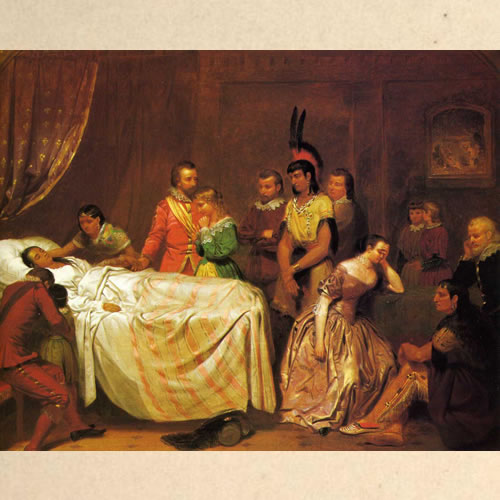
The Rolfe’s journeyed to England in 1616, were a hit, helped bolster the Virginia Company’s books. But the successful junket came at a price. The Powhatan natives were affected by the dirty English civilization. Pocahontas fell ill and died at the outset of their return journey to Virginia. Further, one of Pocahontas’ attendants, Tomocomo, spread his negative reviews to powerful Powhatan leaders upon his return.
Those words had an affect, as Opechancanough, Powhatan’s successor, let the words fester, and began plotting an attack against the English.
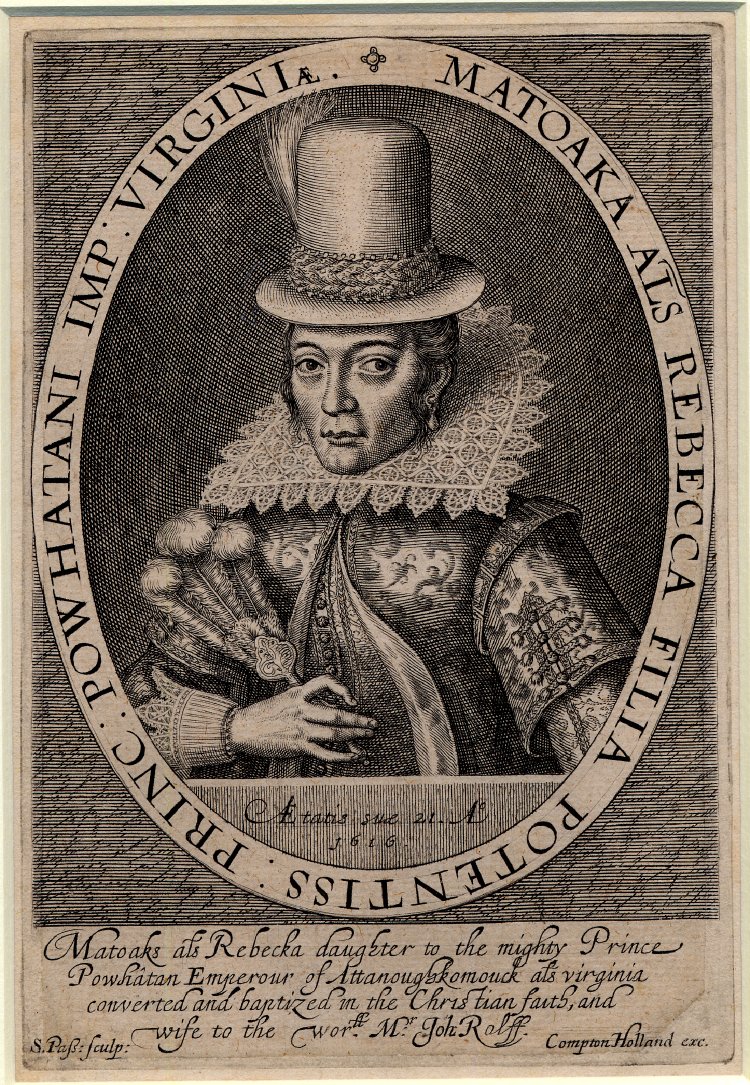
All photography used on this site is owned and copyrighted by the author unless otherwise noted. The featured image is the only known picture of Pocahontasfrom her lifetime. It was done by Simon Van de Passe upon Pocahontas visit to England. The next image is The Death of Pocahontasby Junius Brutus Stearns.






 Virginia History Podcast


